Looking for the best hairstyle for face shape can make a haircut seem more scientific than it is. A mirror, a tape measure, and a few diagrams can describe proportions, but they cannot decide whether you enjoy a blunt bob or have patience for a fringe. Face shape is useful as a way to notice balance; it works badly as a set of beauty rules handed down before you sit in the chair.
Read your proportions without trying to force a label
Start with dry hair pulled gently away from the face and look straight ahead in ordinary light. Notice the width of the forehead, the fullest point of the cheekbones, and where the jawline turns toward the chin. An oval face often appears longer than wide with a softly rounded jaw. A round face tends to have similar width and length with fuller cheeks. A square face may show a broader, more angular jaw, while a heart face often has a wider forehead and a narrower chin.
Decide what you want the haircut to do on an ordinary morning
Most people do not land neatly in one box. One cheekbone can sit a little higher, a hairline can make the forehead look broader, and weight changes or glasses alter the picture. I would not spend an evening trying to prove that you are exactly one shape. A more useful question is where your eye goes first: the forehead, the cheek area, the jaw, or the length of the face.
Let texture and density overrule a flattering photograph
Take a relaxed photograph at eye level if the mirror feels confusing. Avoid a close selfie; the lens can enlarge the middle of the face and soften the sides. Compare the photo with your usual hairstyle and then with hair pinned back. The difference shows how much of the apparent shape comes from the haircut already framing it.
The phrase hairstyles for face shape often skips the part that matters after the salon: what do you want to see when your hair has not been professionally dried? You might want more height at the crown, softness around a strong jawline, less hair falling into your eyes, or simply a line that survives being tucked behind the ears. Those goals point to cut choices more clearly than a diagram does.
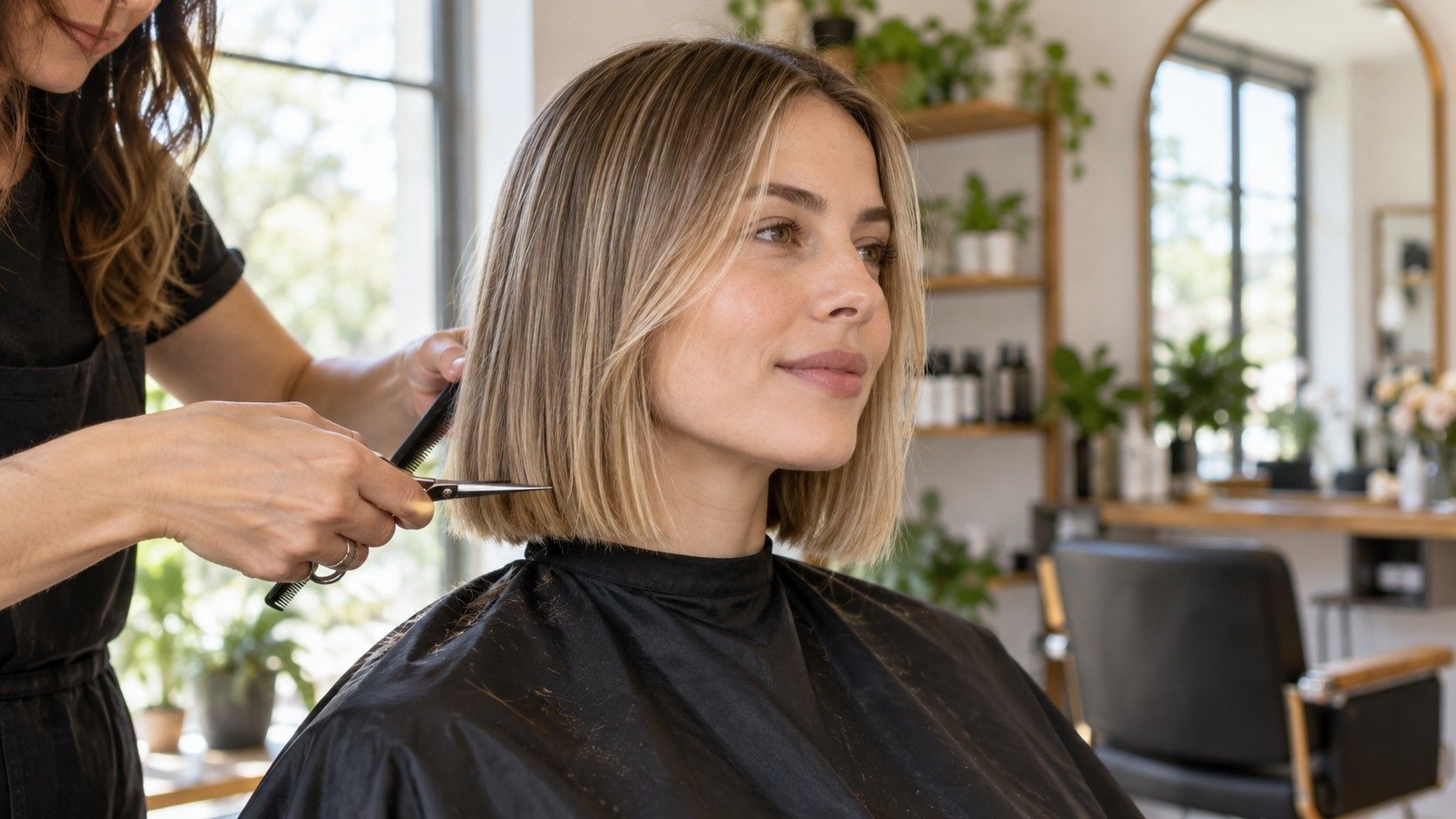
Think in contrasts. A blunt, jaw-length line puts attention near the lower face. Long layers create vertical movement and can pull the eye downward. A fringe changes how much forehead is visible. A side part shifts weight across the face, while a centre part makes the two sides more symmetrical. None is universally right. The question is whether the effect matches the version of yourself you recognise.
It helps to separate shape from confidence. If you have always worn long hair, a short cut can feel startling even if it suits your proportions beautifully. That initial shock is not proof of a mistake. At the same time, choosing a cut that needs forty minutes of styling when you normally air-dry is a real mismatch. Your routine is part of the design.
| What you notice | Cut detail worth testing | Practical check |
|---|---|---|
| You want more visible length | Long layers or a lob below the jaw | See where the first layer lands when hair is air-dried |
| You prefer softer lines near the jaw | Texture, curved ends or face-framing pieces | Ask whether the shape needs heat styling each day |
| Your forehead feels dominant to you | Long curtain fringe or side-swept fringe | Check the natural direction of the front hairline |
| You want a sharper outline | Blunt bob, clean perimeter or defined parting | Find out how often the line needs trimming |
Use face-shape patterns as starting points, not instructions
For an oval face, many lengths work because the overall proportions are already fairly balanced. That does not mean every cut will feel equally good. A long face-framing layer can bring attention to the cheekbones; a blunt fringe can shorten the visible forehead; a cropped cut can show the neck and jaw more clearly. The deciding factor is often hair density and personal style rather than the label oval.
For a round face, people often look for length or lift because vertical lines change the silhouette. A long bob below the chin, layers beginning below the cheekbones, or a little crown height can create that effect. But a short bob is not forbidden. If the cut has texture, a side part, or height near the crown, it may feel lively rather than wide. The detail matters more than the category of haircut.
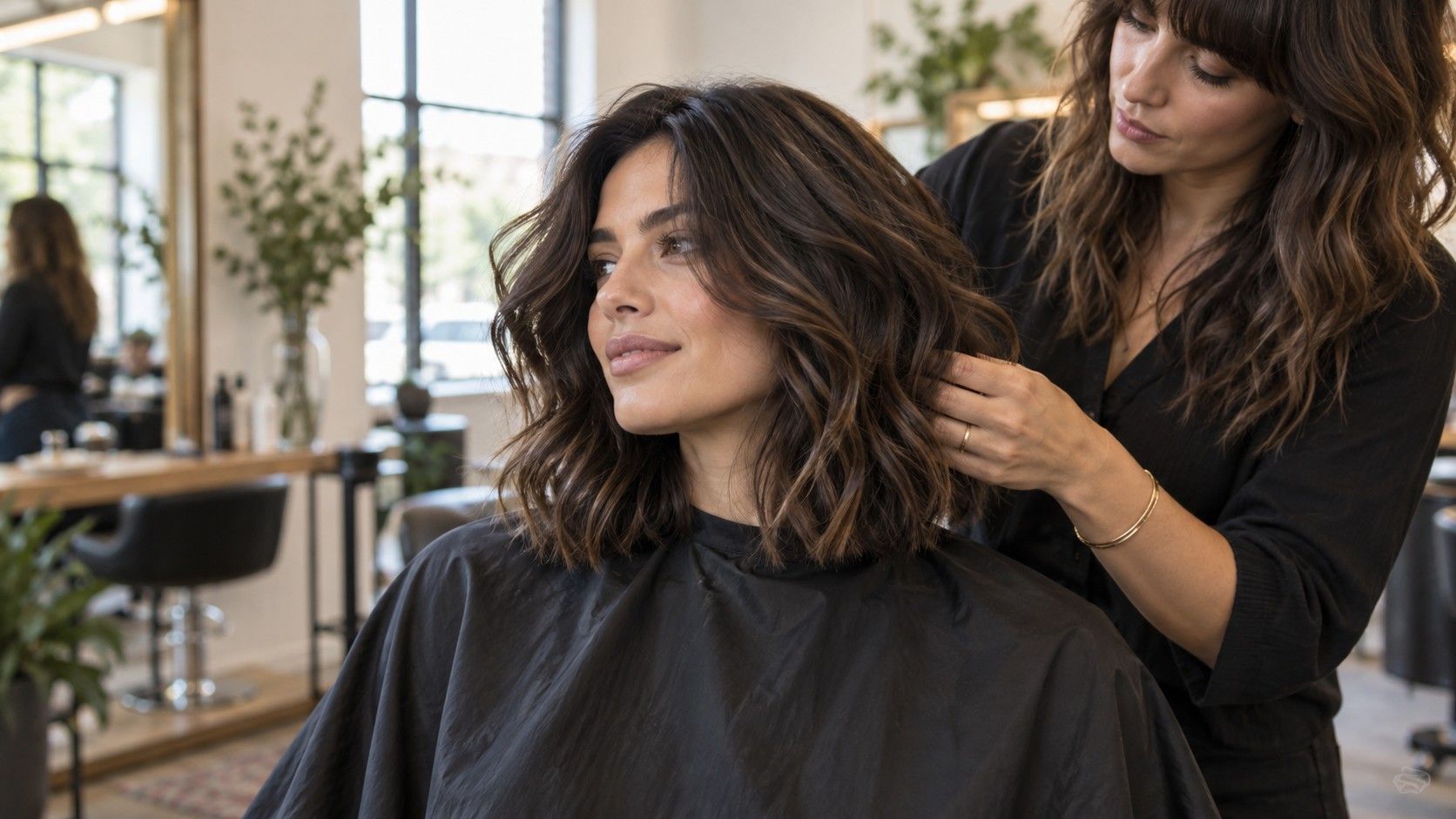
For a square face, soft movement near the jaw can feel pleasing if you want less emphasis on angles. A textured fringe, loose layers, or a wavy lob gives the outline a different rhythm. Some people prefer the opposite and choose a precise blunt cut because they like the contrast with a defined jawline. Both are valid reactions. The best hairstyle for face shape is not always the one designed to hide a feature.
For a heart face, a longer fringe or layers around the chin can balance a wider forehead if that is your goal. Avoid assuming that a narrow chin needs fixing. A short pixie with volume through the crown can look striking, while a shoulder-length cut with a soft side part can look quieter. Try both directions in a virtual preview or with pinned hair before reducing the choice to one formula.
A reference photo often shows hair behaving in a way your own hair may not. Fine hair can make a heavily layered style look sparse at the ends. Very thick hair can turn a compact bob into a triangle if the interior weight is not removed carefully. Straight hair displays a blunt line clearly, while waves may bend that line upward or outward by lunchtime. These are construction questions, and they deserve more attention than the model's face shape.
Say how you normally dry your hair. If you diffuse curls, a stylist needs to account for shrinkage before cutting the first layer. If you smooth hair with a brush, a face-framing section can be cut to work in that direction. If you rarely use heat, ask to see how the cut sits after a rough air-dry. A flattering salon finish can hide a shape that is impractical at home.
Your hairline matters too. A strong cowlick at the front changes what a fringe can do. A thin temple area may make a deep side part look less stable than it did in a photo. This is why a good consultation includes touching the hair and watching where it falls, not merely matching your face to a chart.
Make a reference collection that gives a stylist something useful
Save a small group of images that have something in common. One may show the length you want, another the texture, and another the fringe or parting. Add a photo of yourself on an ordinary hair day. That last image is often the most useful because it shows density, growth direction, and what you are willing to style.
When you sit down, describe the details instead of presenting the image as a demand. You might say that you like the collarbone length, the softer pieces beginning around the cheekbones, and the fact that the ends do not look heavily thinned. If you dislike something, name it too: too much volume at the sides, a fringe that covers the eyebrows, or layers that look difficult to grow out.
Ask what needs to change for your hair. A stylist may recommend keeping two more centimetres, moving the shortest layer lower, or choosing a longer version of the fringe. That conversation is a good sign. A copied haircut can look different on two people for ordinary reasons, and a tailored adjustment usually makes it easier to wear.
Test the choice against maintenance, grow-out and your own taste
Before booking a major change, ask how the cut behaves after six weeks and after three months. A blunt bob usually needs regular perimeter trims. A soft long-layered cut can grow out gently but may need refreshment if the front pieces lose their shape. A short crop offers a dramatic change but puts the schedule in charge sooner. There is no wrong answer, only a maintenance level that fits your calendar.
Try a low-risk version first when you are uncertain. A shoulder-length cut can be shortened later. A long curtain fringe can be pinned back while you learn whether you like hair across the forehead. A subtle off-centre part can give you a new silhouette without a cut at all. These small tests keep the decision in your hands.
What haircut suits my face is a sensible question, but it is incomplete. The more useful version is: what shape, length, and routine will let me look like myself with a little more intention? Face shape can help you frame that answer. Your hair texture, habits, and reaction in the mirror should finish it.