Fine hair has a habit of looking polished for the first ten minutes after styling, then quietly settling against the head by lunch. That does not mean it needs an elaborate cut or a bathroom shelf full of powders. The best hairstyles for fine hair usually come down to a believable shape, a clean line at the ends, and enough room at the roots for the hair to move instead of collapsing into one flat sheet.
First, separate fine hair from a sudden change in density
Fine refers to the width of each strand, not necessarily how much hair is on the head. Someone can have very fine strands and still have a lot of them. In a salon chair, that difference matters more than the label on a product bottle. Fine but dense hair can carry a bob and a few soft internal layers. Fine hair with more scalp showing through often looks better with a stronger perimeter and fewer carved-out sections.
A clean perimeter does more work than choppy ends
It is worth noticing what has changed before booking a dramatic haircut. If a ponytail feels much smaller than it did a few months ago, or the part suddenly looks wider in the same bathroom light, a new stack of texture sprays will not answer the question. A haircut can make the existing hair look fuller, but it cannot explain a sudden change. For ordinary fine hair, though, the goal is simpler: stop sacrificing the ends in pursuit of airy volume at the crown.
Short and medium cuts give fine hair the easiest starting point
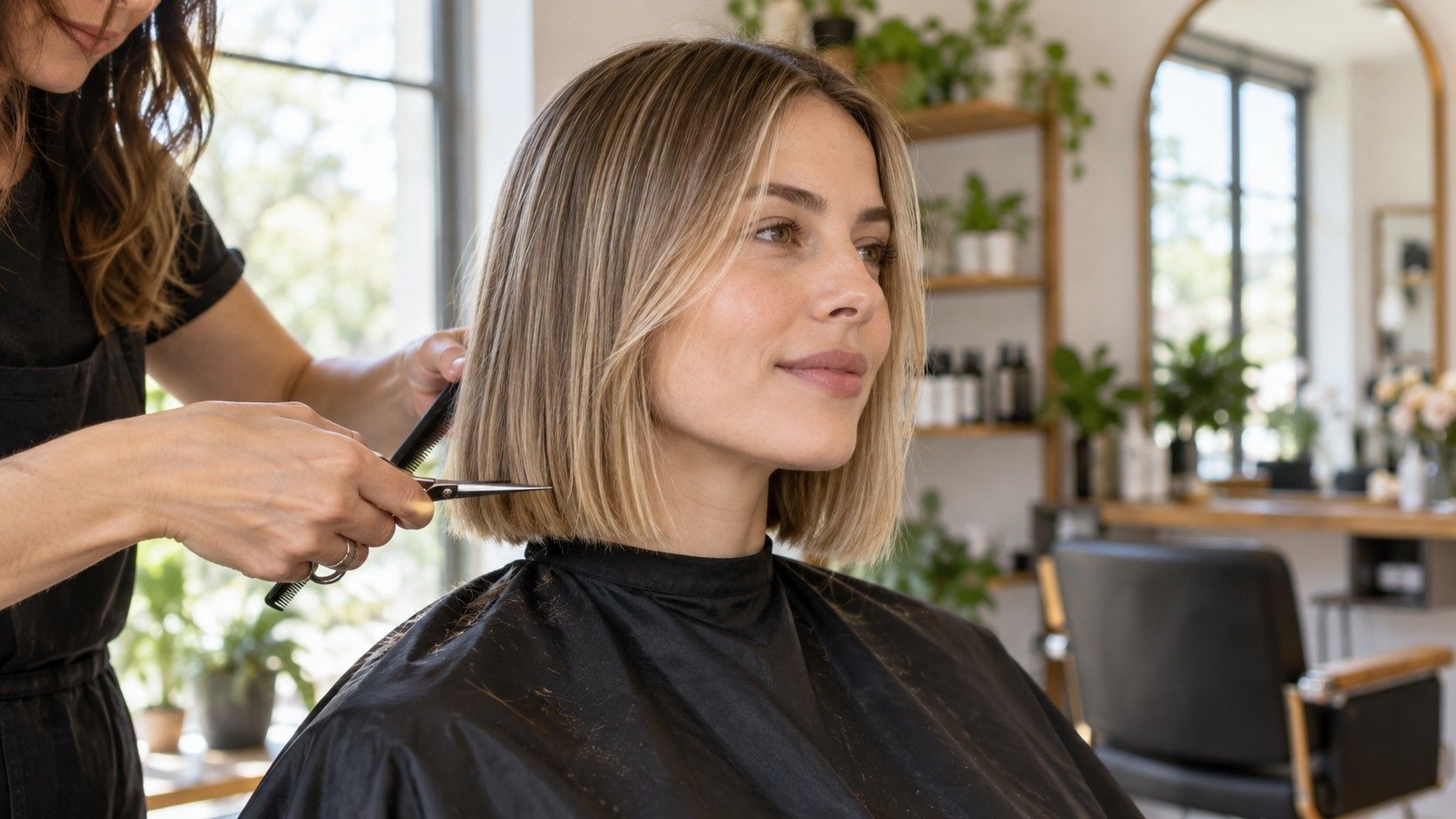
The most dependable trick in haircuts for thin hair is an intact bottom line. On a one-length bob, collarbone cut, or short lob, the ends gather together and create a denser visual edge. I have seen otherwise good cuts lose all their presence because the last two inches were point-cut until they became transparent. Movement is useful. Wispy ends are not automatically movement; on fine hair they can read as unfinished.
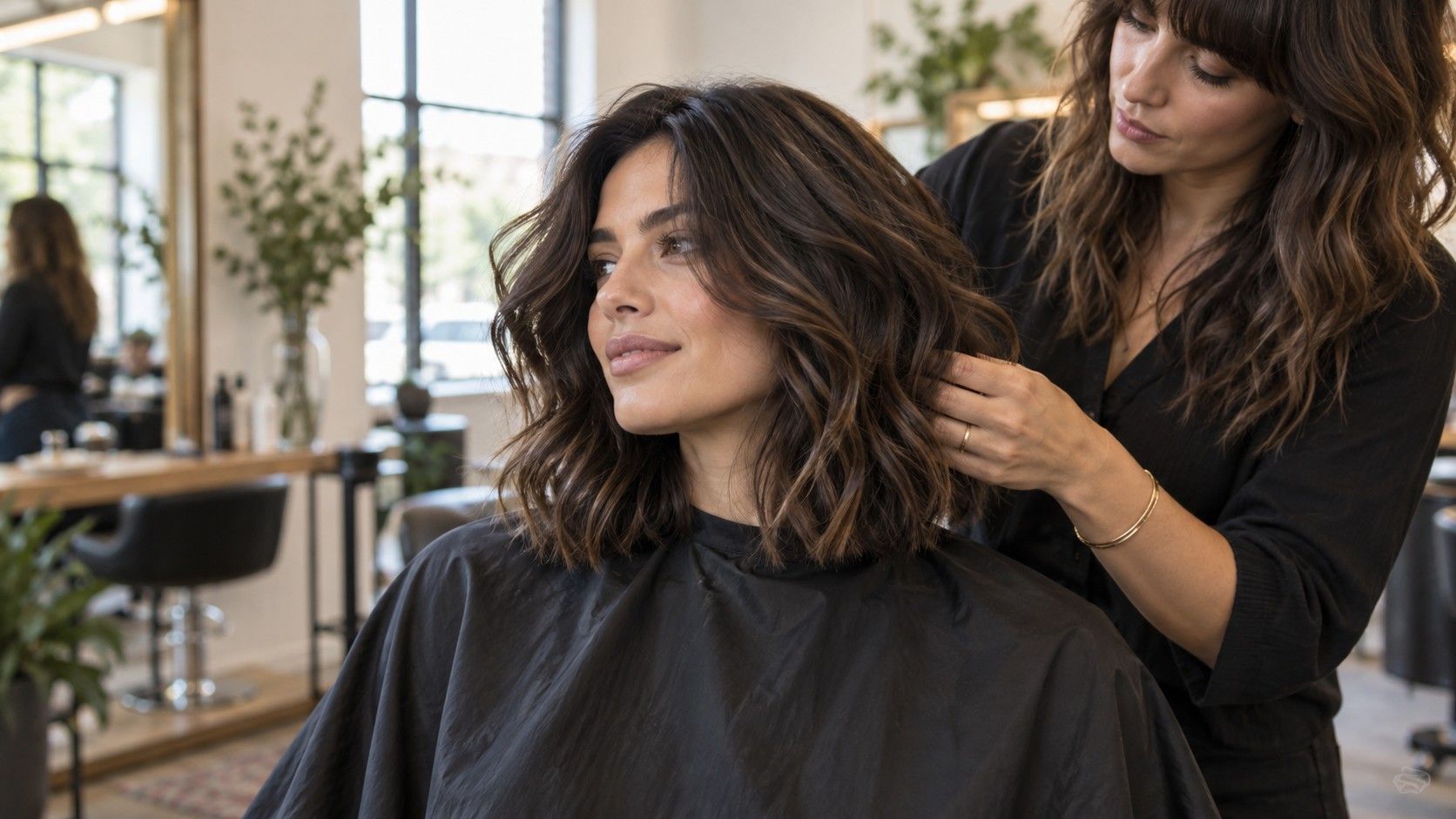
Ask to see the back of the cut before the blow-dry adds lift. The mirror test is blunt but useful: if the outline disappears when the hair is damp and unstyled, no amount of curled ends will make it look substantial on an ordinary Tuesday. A slightly blunt line can still be soft around the face. The distinction is that the softness lives in the framing pieces, while the overall hemline remains visible.
| Cut shape | Why it can suit fine hair | Watch for |
|---|---|---|
| Jaw to chin bob | Creates a clear, compact outline and makes the neck feel longer | Too much graduation can leave the nape looking thin |
| Collarbone lob | Keeps enough length for a ponytail without dragging the roots down | Long disconnected layers can make the ends look sparse |
| Soft pixie | Lets the crown look naturally lifted with very little styling | Heavy fringe may separate if the front is especially fine |
Layers should support the shape, not hollow it out
Layers are often sold as the answer to everything, which is a little too convenient. A few long, blended layers can stop a medium cut from hanging like a curtain, especially when the hair has a natural bend. Short layers cut through very fine hair can have the opposite effect: they remove the little weight that holds the ends together, then ask mousse to repair the visual damage.
A practical way to judge a layered idea is to imagine it air-dried. If every section needs a round brush to meet the section beside it, the cut may be demanding more from fine hair than it can comfortably give. Face-framing pieces beginning around the cheekbone are often enough. A subtle crown layer can help when the head shape is very flat at the back. Beyond that, the stylist should have a specific reason for each layer rather than treating thinning shears as a finishing ritual.
A compact bob is popular for a reason. It does not need to pretend to be a mane. With the length sitting between the chin and collarbone, fine strands support each other, and the hair can swing without exposing a lot of feathered ends. A side part gives a quick change in root direction; it works best when it is moved gradually rather than dragged across a fixed part and sprayed into submission.
A pixie can be equally forgiving, but it needs an honest consultation. The attractive version is not the same as a short cut that has been bulked up in a photo with a heavy blow-dry and a hidden row of clips. Fine hair hairstyles at this length work when the crown has a little texture, the sides are tailored to the head, and the fringe is left light enough to separate naturally. Maintenance is more frequent, usually every four to six weeks, but the daily routine can be surprisingly short.
Long fine hair can work if the length earns its place
There is nothing wrong with keeping fine hair long, but the last few inches need regular scrutiny. When the ends look stringy, length starts to make the whole style seem thinner, even if the hair at the roots is healthy. A collarbone or chest-length cut with a solid line often looks more intentional than hair grown well past the point where it has any shape left. That is not a command to cut it all off. It is a reason to judge the back view, not just the front.
For a longer cut, loose bends usually look more convincing than tightly curled lengths. A curling iron held vertically for a few seconds, followed by gentle brushing once the hair cools, gives the hair a wider silhouette without turning it into a formal event style. If the bends fall out, that is information. It may be better to wear a smoother finish with a lifted root than to keep adding heat and product to force a texture that does not last.
Style the roots lightly and leave the ends alone
Fine hair responds badly to panic layering of products. A modest amount of root-lift foam or a light spray applied near the scalp can be enough, especially if the hair is dried with the roots directed away from their usual part. Dry the front and crown first. Those sections set the impression of volume; spending ten minutes perfecting the underside rarely changes what anyone sees.
After drying, use your fingertips to loosen the roots rather than raking a brush through the entire length. Dry shampoo can help on clean hair when used sparingly at the crown, but a chalky scalp and stiff strands are not a win. Heavy oils and rich masks belong well below the ear if they are used at all. Fine hair often looks its best when it still feels like hair: clean, touchable, and allowed to have a little imperfect movement.
Bring a decision to the appointment, not a pile of conflicting photos
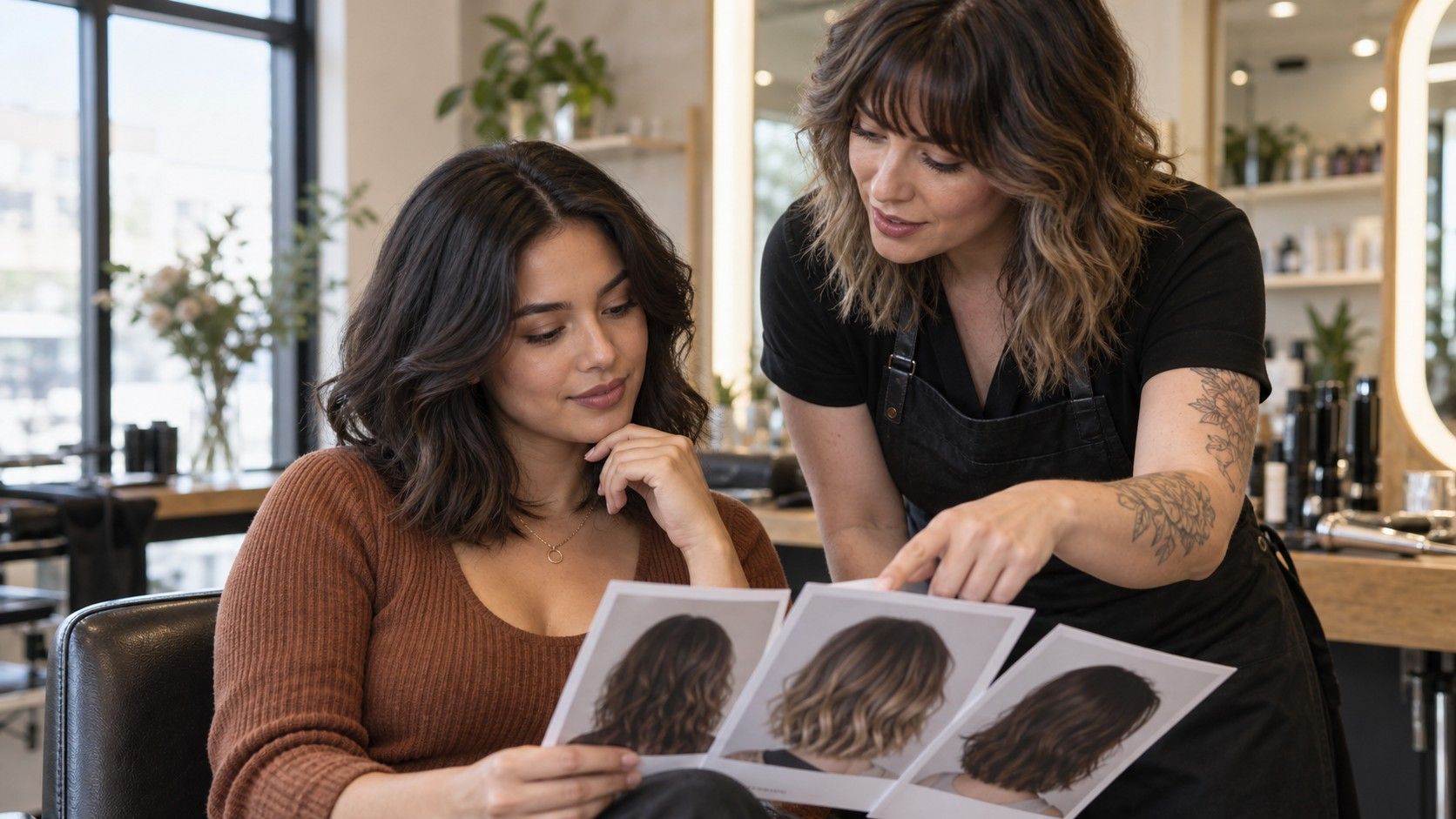
When choosing between fine hair hairstyles, decide what you want the cut to solve. Maybe the priority is a fuller-looking ponytail. Maybe it is a wash-and-go shape for a humid commute, or an easier way to grow out breakage around the temples. Those are useful requests because they give the stylist something concrete to preserve. Ten screenshots with different textures and extension-heavy styling are less useful, however pretty they look on a phone.
Ask how the cut will behave after eight weeks, whether the ends will still look solid if you air-dry, and where the shortest layer will land when it shrinks after washing. A good answer should be plain enough to picture in your own mirror. The right cut for fine hair is rarely the loudest one. It is the one that still has a shape on the day you skip the round brush.