A virtual hair color try-on is very good at one thing: stopping you from walking into a color appointment with only a vague feeling that you want “something warmer, but not orange.” It is much less good at predicting chemistry, previous dye, or what happens to a cool brown under supermarket lighting. Treat a preview as a way to narrow choices and have a clearer conversation, not as a promise that the exact pixels on your screen can be painted onto your head.
Use a preview to make the right decision, not to chase a perfect image
The useful decision is usually a color family: softer brunette, brighter copper, beige blonde, cool ash, or deeper black. A hair color simulator can show whether a change makes your eyes more noticeable, whether the contrast feels too severe, and whether you miss the depth around your face. It is especially helpful if you keep switching between two opposite ideas and need to see them beside the same skin tone and haircut.
Choose a photo that gives the preview a fair chance
What it cannot reliably show is the cost of getting there. Going from dark box dye to a pale blonde image may look convincing in a virtual preview, but the salon path can involve several appointments, warm in-between stages, and a compromise to keep the hair in good condition. The more dramatic the distance from your current base, the more the digital result needs a reality check.
Compare color families before arguing over tiny shade names
Try-on images also flatten the emotional rush of a big change. A vivid red filter may feel thrilling for thirty seconds, then look exhausting when you picture it beside your work clothes, gym kit, and the roots you will see in four weeks. Save a few options, leave them overnight, and look again in the morning. If one shade still feels like you rather than a costume, it is worth taking further.
Photo lighting is the quiet villain of almost every virtual hair color try on. A warm kitchen bulb makes natural brown look golden; direct midday sun can erase depth and turn even neutral hair pale. For a useful test, take a recent photo near a window on an overcast day or in even indirect daylight. Face the light, keep your hair loose, and avoid a strong beauty filter. The image does not need to be glamorous; it needs to tell the truth about your current base.
Keep your full hairline, the top of the head, and enough length in the frame. A selfie cropped at the cheek can make a color look plausible because the tool has very little hair to map. It will not help you decide whether a new shade works with your darker roots, faded ends, or a grown-out balayage. If you wear glasses, include them in one version. Frames change perceived contrast around the face more than people expect.
Use more than one image if you can. One in daylight and one under neutral indoor light will reveal whether you are being seduced by a particular photograph. If a virtual shade looks good only in a sunny close-up and turns flat or greenish in the indoor version, do not assume the salon result will magically choose the flattering light.
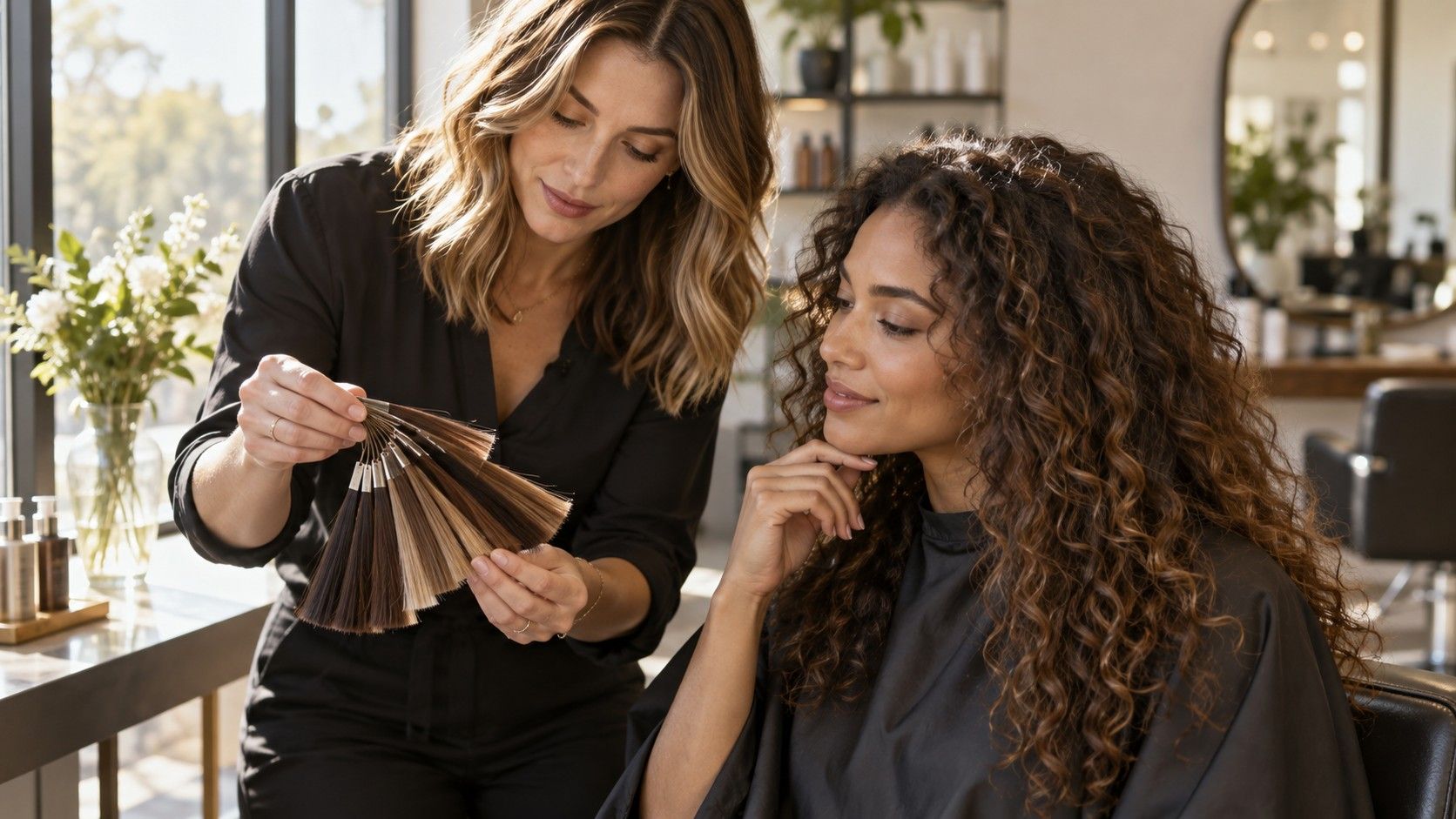
Start wide. Test a shade close to your natural color, then one step lighter, one step darker, one warmer, and one cooler. Put the results side by side without changing the pose or filter. This gives you a much more useful read than sampling twelve nearly identical swatches with names such as iced mocha or smoked caramel. The name is marketing; the visible contrast and undertone are what you will live with.
Undertone is worth watching around the skin, not only in the hair. Cool summer hair colors, for example, often lean toward softened ash, mushroom brown, muted beige blonde, or a restrained cool red rather than bright gold. On someone who prefers silver jewellery and looks washed out in orange-based makeup, those quieter shades may feel harmonious. But a screen cannot diagnose a personal color season with scientific certainty, so use that label as a prompt to compare, not a rulebook.
Notice the eyebrows as well. A very light virtual blonde can look coherent because the tool leaves your brows untouched and the image is small. In person, the contrast between deep brows and pale hair may be exactly what you want, or it may make the change feel harsher than expected. The try-on is useful precisely because it lets you notice these questions before any bleach is mixed.
| Preview comparison | What it can tell you | What it cannot promise |
|---|---|---|
| Close to your current shade | Whether more depth or softness suits your features | How fading will alter the tone after several washes |
| One or two levels lighter | Whether a lighter frame feels fresh or too low-contrast | How many lifting sessions your current base needs |
| Warmer versus cooler family | Which undertone you prefer beside your skin and wardrobe | The exact reflected warmth in different lighting |
| High-contrast fashion shade | Whether the idea feels exciting enough to pursue | Maintenance, staining, or the durability of the result |
Why real hair will not behave like a clean digital overlay
Hair color is not a flat surface. The roots may be virgin hair, the mid-lengths may hold old permanent dye, and the ends may be more porous from heat or sun. A simulator usually lays one smooth tone across all of that history. A colorist has to work with the actual unevenness, which is why a realistic consultation starts with questions about previous color, toners, henna, swimming, and at-home dye.
Lighting changes the result again after you leave the salon. Ash brown can look softly neutral by a window and noticeably green next to a warm restaurant lamp. Copper can appear rich in shade and very bright in direct sun. This is not evidence that the color has gone wrong; it is how pigments reflect different light. Look at your current hair in several places before deciding that a preview's single lighting condition is the whole story.
Condition changes perception too. Healthy, glossy hair reflects light in a way that makes color appear deeper and more even. Dry, rough ends scatter light and can make the same shade look dull or brassy. That is why a color change sometimes seems disappointing even when the formula was technically right. If the ends are fragile, a less aggressive lift or a gradual change may give a more satisfying result than forcing the brightest preview immediately.
Turn the saved images into a useful salon conversation
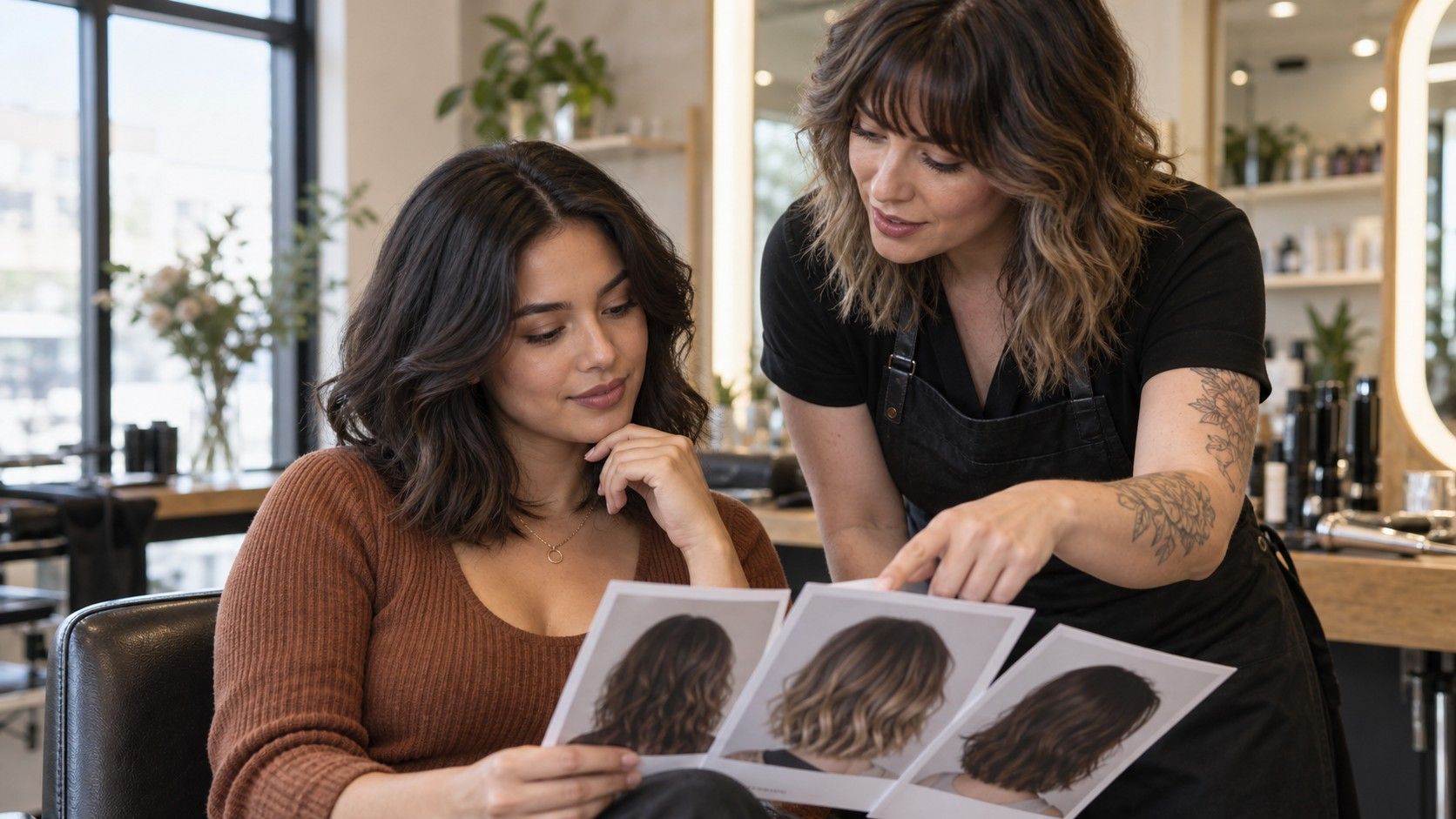
Bring three saved previews, not thirty. Include one that feels safest, one that feels most exciting, and one that shows the direction you definitely do not want. Add a clear current-hair photo in daylight. This helps the colorist separate your preference for brightness from your preference for warmth, which are often confused when someone says they want “lighter.”
Describe the maintenance you can honestly manage. Are you happy returning every six weeks, or do you want roots that blend for three months? Do you use purple shampoo, avoid heat, or do none of the above? A pale, high-lift result can be possible and still be the wrong choice if you dread the upkeep. A softer root shadow or dimensional highlights may give the same general effect with fewer urgent appointments.
Ask what the realistic first appointment can achieve and what trade-off comes with it. A good answer may include a strand test, especially if you have old dark dye, lightened lengths, or an uncertain color history. The strand test is not an admission of failure. It is a small practical check that shows how your hair lifts and whether an undertone needs correcting before a full service.
Make one final reality check before committing
Look at your favorite preview beside a photo of your natural roots. If the virtual result erases every bit of depth, consider whether you are ready to maintain that line as it grows in. If the change is subtle enough that nobody but you will notice, decide whether that is reassuring or disappointing. Both reactions are valid, but they lead to different appointments.
Then picture the color in the ordinary places that photographs skip: a grey office lift, a rainy bus stop, your bathroom mirror at seven in the morning. The best hair color try-on does not persuade you that a shade will be flawless everywhere. It helps you choose a direction you will still enjoy when it is not being lit, filtered, and admired on a screen.
A virtual preview earns its place when it makes you more specific and more realistic. Use it to compare undertones, identify the level of change that feels comfortable, and prepare questions about your own hair history. Leave the final formula, timing, and promised result to a real assessment of the hair on your head.