Thick hair can make a good haircut look generous and a careless one look like a helmet by the time you reach the car. The problem is rarely just volume. It is where the weight sits, how quickly the hair expands in damp weather, and whether the cut has a shape underneath the blow-dry. The best hairstyles for thick hair remove pressure where it causes trouble while leaving enough hair to look deliberate when the styling fades.
Work out what kind of thick hair you are dealing with
Thickness is not one thing. Some people have a huge number of fine strands that puff at the sides. Others have coarse strands that feel heavy even in a low ponytail. Then there is dense wavy or curly hair, which can look compact while wet and twice as wide once dry. These types should not get the same answer, even if all of them describe their hair as thick.
Take out weight inside the cut, not from every visible end
Before choosing a cut, look at where you feel the bulk. Is it the triangular spread around the jaw, a heavy shelf at the nape, or a long mass that pulls the roots flat? The answer changes the plan. A person with dense hair at the back may benefit from quiet internal weight removal. Someone whose hair expands through the sides may need a stronger outline and better-placed layers. Taking scissors to every area with the same enthusiasm usually creates a different problem.
Medium and long cuts need a shape you can see without heat styling
Internal layers can make thick hair easier to wear because they reduce the dense mass beneath the surface. Done well, they are nearly invisible when the hair is down. Done carelessly, they create short pieces that spring out around the crown or leave the perimeter looking frayed. The difference comes down to placement and restraint. A stylist should be able to say where the hair feels heavy and why that section, rather than the entire head, needs less weight.
There is a useful test after the cut but before the final styling: run your hands through the lower back section. It should feel easier to gather, yet the outer shape should still look full. If the ends suddenly feel thin and the hair only looks smooth after a long brush-out, too much has probably been removed. Thick hair does not need to be made sparse. It needs to stop fighting its own outline.
| Approach | Best when | Possible drawback |
|---|---|---|
| Internal weight removal | The hair feels heavy at the nape or through the middle lengths | Too much can create hidden short sections that poke out |
| Long surface layers | Thick hair has a wave and needs room to bend | Starting layers too high can create a wide shelf at the sides |
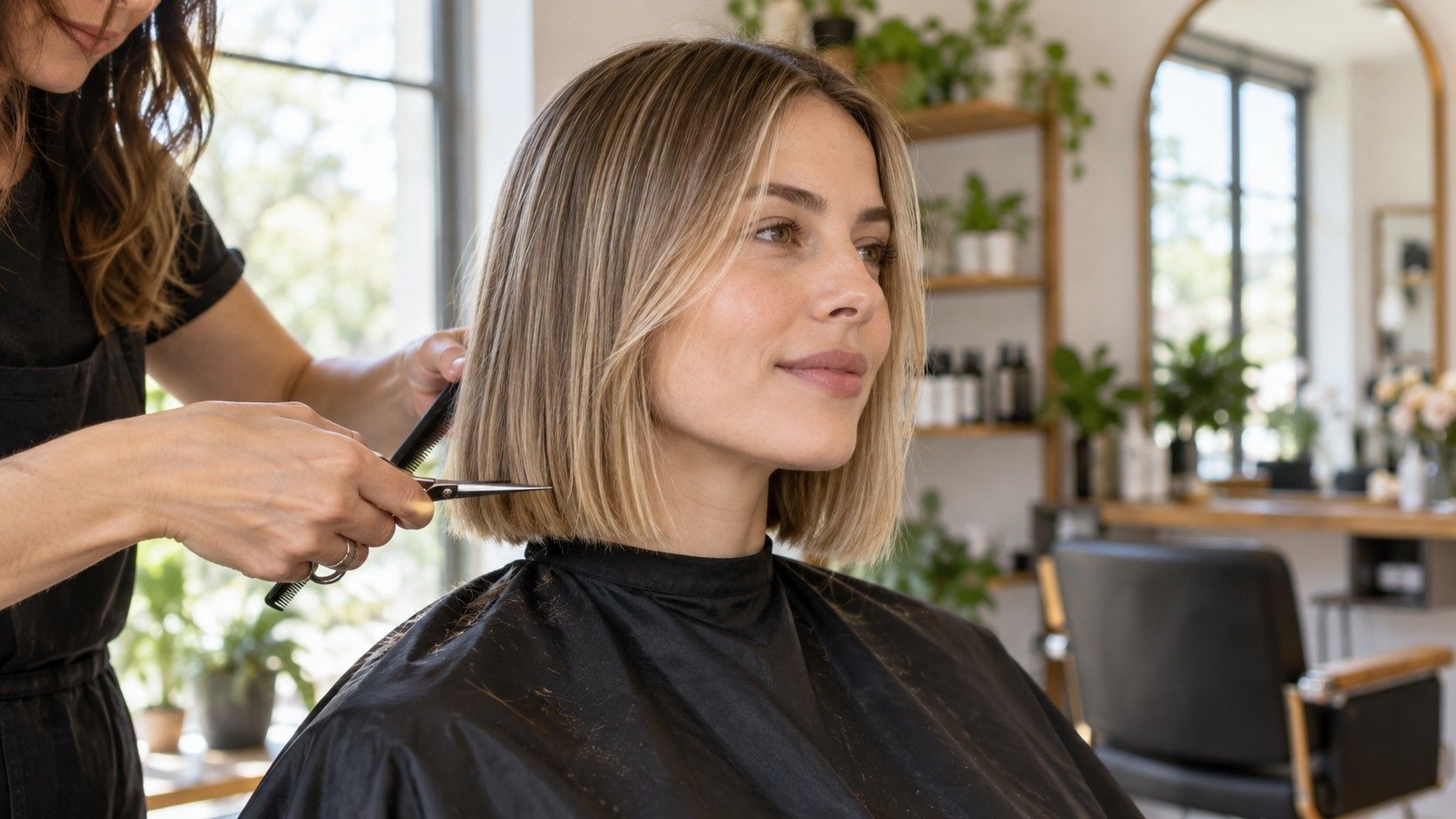
| Blunt long bob | You want a compact shape with less daily styling | A very dense blunt line may feel heavy if it sits at the jaw |
| Hidden undercut | The main problem is heat and bulk at the nape | It needs regular upkeep and is obvious during grow-out |
Short cuts need structure, not a desperate attempt to make hair smaller
A short cut can be excellent for thick hair, but it needs a shape that acknowledges the density. A textured pixie with length on top can look easy because the hair has somewhere to go. A cropped bob can work when the back is shaped carefully and the sides are not allowed to fan out. The risky version is a short cut thinned aggressively everywhere, then held in place with a stiff product. It may look neat under salon lights and turn unruly after the first humid walk home.
If you are considering a pixie, pay attention to the grow-out plan. Thick hair grows outward as well as downward, so the area above the ears can become bulky quickly. A good cut has a clear return schedule and a realistic answer to what happens at week six. If frequent appointments sound tedious, a jaw-length bob or a long bob is often a calmer choice. It carries weight without letting it pile up around the neck.
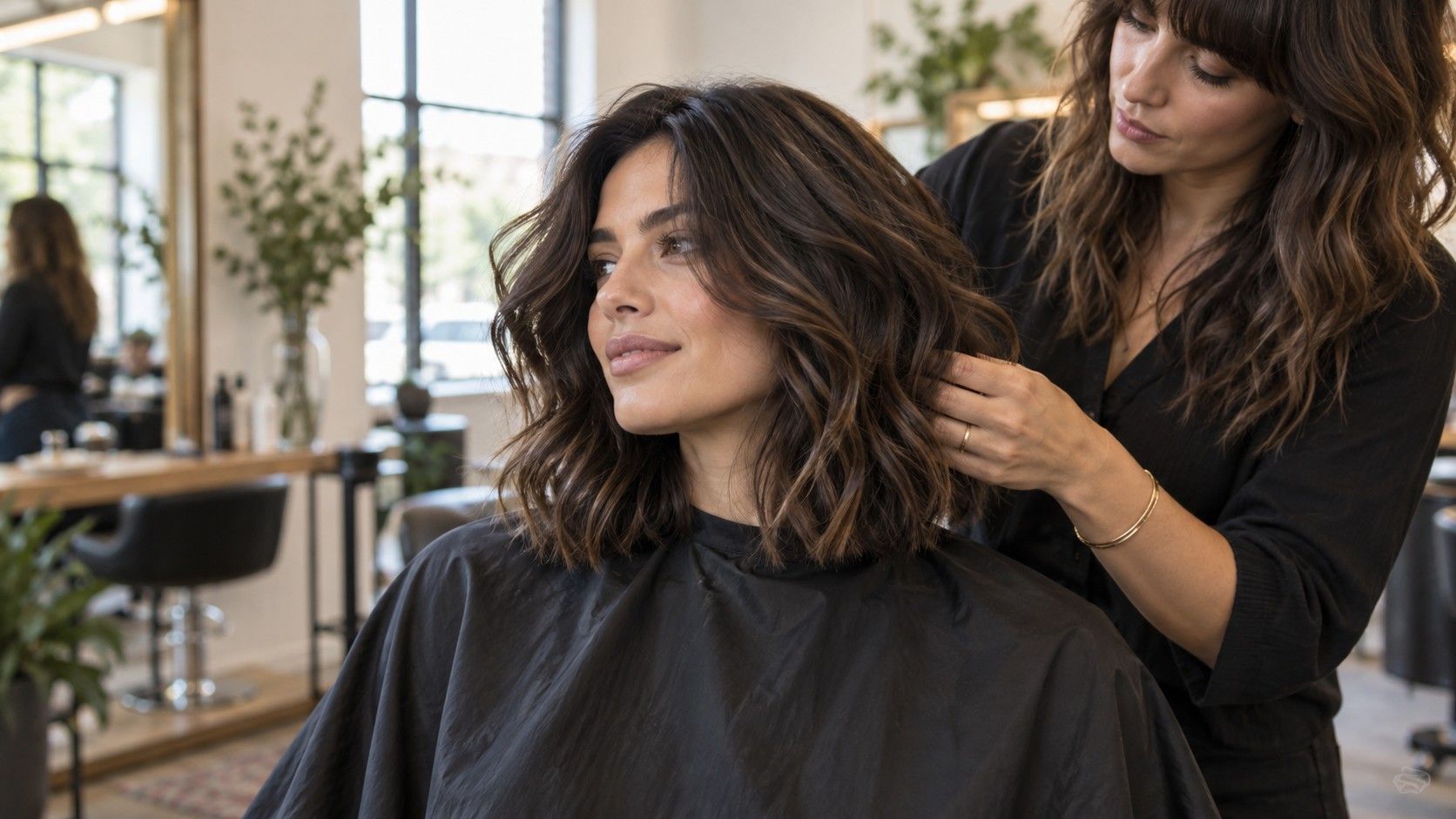
A shoulder-length shag can be a relief for thick wavy hair because the layers let the wave break into sections instead of forming one broad triangle. The word shag has become loose enough to mean almost anything, so ask where the shortest pieces will sit and how the back will look after air-drying. If the top layers start too close to the crown, thick hair can form a ledge that refuses to blend until it is restyled.
Long hair benefits from a clearer decision at the bottom: rounded, softly U-shaped, or a fairly straight line. A vague hem tends to look heavier because there is nothing to guide the eye. Long layers that begin below the shoulders can make the ends move while keeping enough weight to prevent puffiness. This is often more useful than chasing maximum thinning. Haircuts for thick hair should make brushing easier, not turn every morning into a battle with a dozen short pieces.
Humidity changes the rules, so plan for an ordinary wet day
Humidity exposes the weak point of a cut. Hair that is smooth and narrow after a professional blowout may widen at the temples, curl at the nape, or lose its part as soon as the air turns damp. That does not mean the hair is misbehaving. It means the style depended on a finish that will not always be available. Thick hair hairstyles are more forgiving when the natural bend has been given a place in the cut.
Try a simple home test before committing to a big change. Wash the hair, use the products you normally own, and let it dry with minimal intervention. Take a photo from the front, side, and back. Those photos show the actual expansion pattern better than a mirror glance while you are adjusting it. Bring them to the appointment. They help a stylist see whether the cut needs more shape around the face, less density at the nape, or longer layers through the lower half.
Use styling products to guide the hair, not freeze it in place
Very thick hair can absorb product until the routine becomes absurd. Start with one purpose: either smooth the outer layer, support a wave pattern, or give the roots some direction. A lightweight cream through damp mid-lengths can reduce friction when brushing. A small amount of gel can help curls clump. What rarely helps is combining cream, oil, mousse, and a strong spray before the hair has even dried. The result may be controlled, but it also feels coated and takes forever to wash.
For a straighter finish, dry the roots first and use a nozzle aimed down the hair shaft. For waves, squeeze rather than brush once the product is in. The aim is not to erase every bit of volume. Thick hair has volume. A flattering style simply puts it in the right places, with space at the crown and a line that does not balloon around the cheeks.
Choose the maintenance level before you choose the reference photo
The best haircut is the one you can keep looking like itself. A hidden undercut may feel wonderful in July and annoying when you decide to grow it out in winter. A short layered cut can be quick to dry but needs frequent reshaping. Long thick hair takes more wash-day time, yet a well-planned cut may go months between major changes. There is no universal rule because the cost is not just money; it is the time spent managing the result.
Bring a reference photo if it helps, but also say what you dislike about your current hair. Too heavy in a claw clip, too wide around the jaw, too hot at the nape, too slow to dry. Those details give the haircut a job. The strongest thick hair hairstyles do not make the hair disappear. They make its weight feel chosen rather than accidental.