There is a temptation to treat a heart-shaped face as a puzzle with one correct answer: add hair here, avoid it there, and hope the mirror approves. Real haircuts are less tidy. A heart-shaped face often has a broader forehead or temple area, noticeable cheekbones and a narrower chin, but the useful choice depends just as much on your hairline, texture and how much styling you can tolerate.
Look at the proportions you actually have
A heart-shaped face does not always look like a cartoon heart. Some people notice the wider upper face first; others see the cheekbones or a small pointed chin. Start with your hair pulled back in daylight, then look again with your normal part and everyday volume. The second view is more useful. A thick side part can shift the whole balance, while a flat middle part can show a forehead you usually frame with hair.
Bangs without making the front feel heavy
It is also worth separating a face-shape decision from a hair-confidence decision. If you want bangs because you have always wanted bangs, say that. If you want to keep a strong curl pattern visible, say that too. A good stylist can work with those preferences. Vague requests for a haircut that will balance everything tend to produce vague layers.
Short cuts and chin-length bobs
For hairstyles for heart shaped faces, the practical theme is placement. You may prefer texture around the lower half, a fringe that does not feel like a solid shelf, or a bob that gives the chin area some presence. None of these are obligations. They are tools, and they work best when chosen for a clear reason.
Fringe is one of the first suggestions for a heart-shaped face because it can change how much forehead is visible. The risk is overcorrecting with a thick, straight band that needs a blow-dry every morning. If your hair has a cowlick or turns wavy at the front, a heavy fringe will announce that conflict before you have had coffee.
Curtain bangs are usually the gentler starting point. They open through the centre or slightly off-centre, then blend into longer pieces at the cheeks. On medium or long hair, they can disappear into layers when you do not want to style them. That growing-out flexibility matters more than the initial salon photo. Ask the stylist to cut them longer first; you can shorten them after seeing how they dry.
A side fringe works well if your natural part already leans that way. It creates a soft diagonal and can be tucked back when you need it out of your face. The everyday check is simple: wash your hair, use only the product you normally use, and see where the front wants to fall. A fringe that needs constant persuasion is a high-maintenance purchase disguised as a haircut.
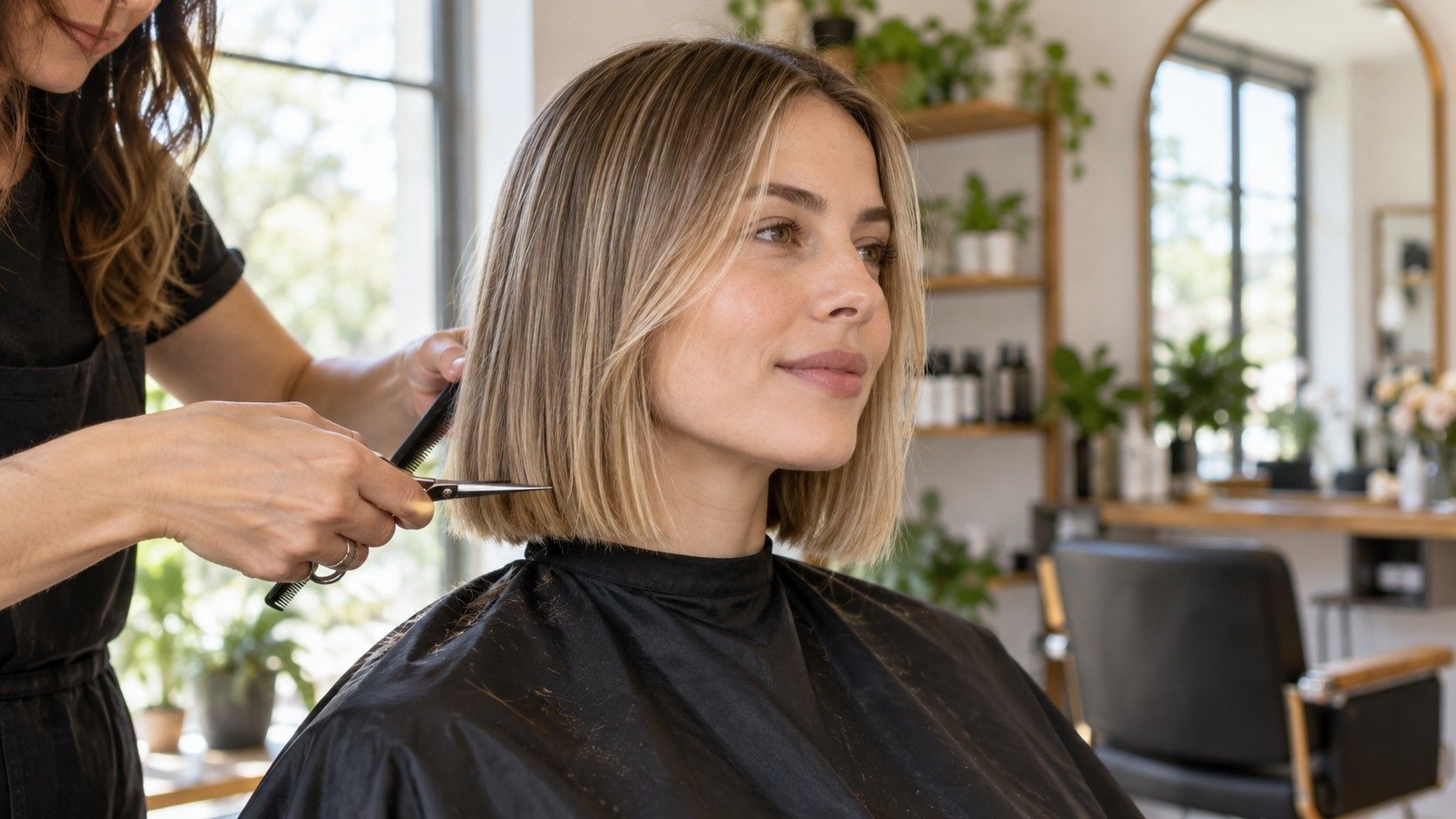
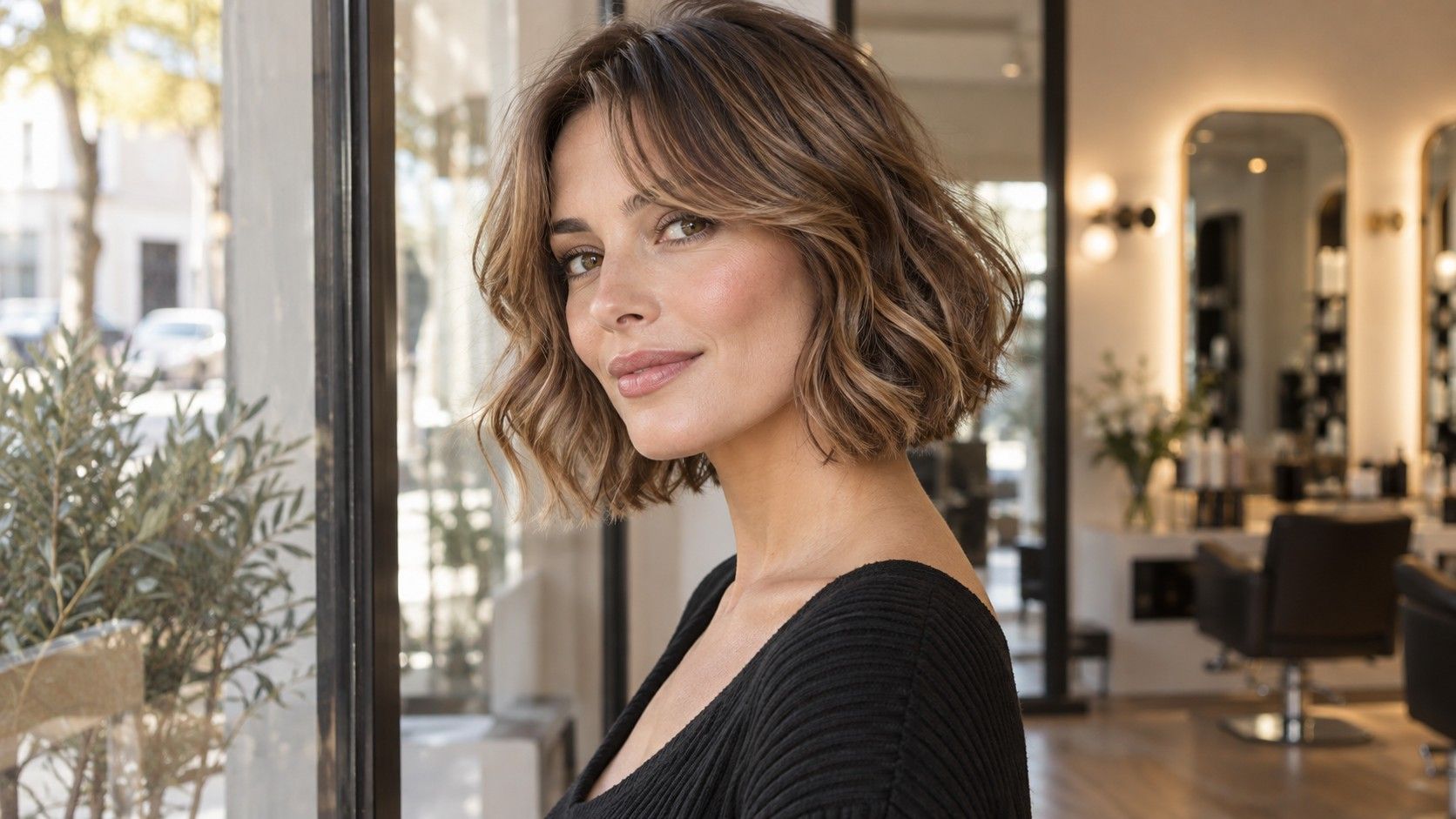
A chin-length bob can be a satisfying reset if you want a visible shape without committing to a cropped cut. It puts some weight around the lower part of the face and gives fine hair a denser-looking perimeter. The line does not have to be perfectly blunt. A little texture at the ends can keep it from looking stiff, especially if your hair flips once it reaches the neck.
Check the bob when your hair is dry and moving. A front that sits just below the chin when carefully styled may rise above it after a damp commute. If you tend to tuck one side behind your ear, mention it before the cut starts; the stylist can keep the front length from looking uneven when you do what you always do.
A short pixie can work too, but choose it for the experience of short hair, not for an old face-shape rule. A longer, textured top gives you choices: forward, to the side, or loosened with a little paste. A close, tidy crop is simpler but makes the hairline and temples much more visible. Neither option is wrong. The honest question is whether that exposure feels exciting or exhausting.
| Style | Why people choose it | Reality check |
|---|---|---|
| Chin-length bob | Keeps a clear shape and can make fine ends feel fuller | Ask how it will dry at the neck and whether it still fits your usual tuck |
| Textured pixie | Gives a short cut some movement and changeable direction | Expect regular trims and a little styling product |
| Collarbone lob | Offers lower-half movement while keeping tying-up options | Check that face-framing pieces do not fall into a ponytail every day |
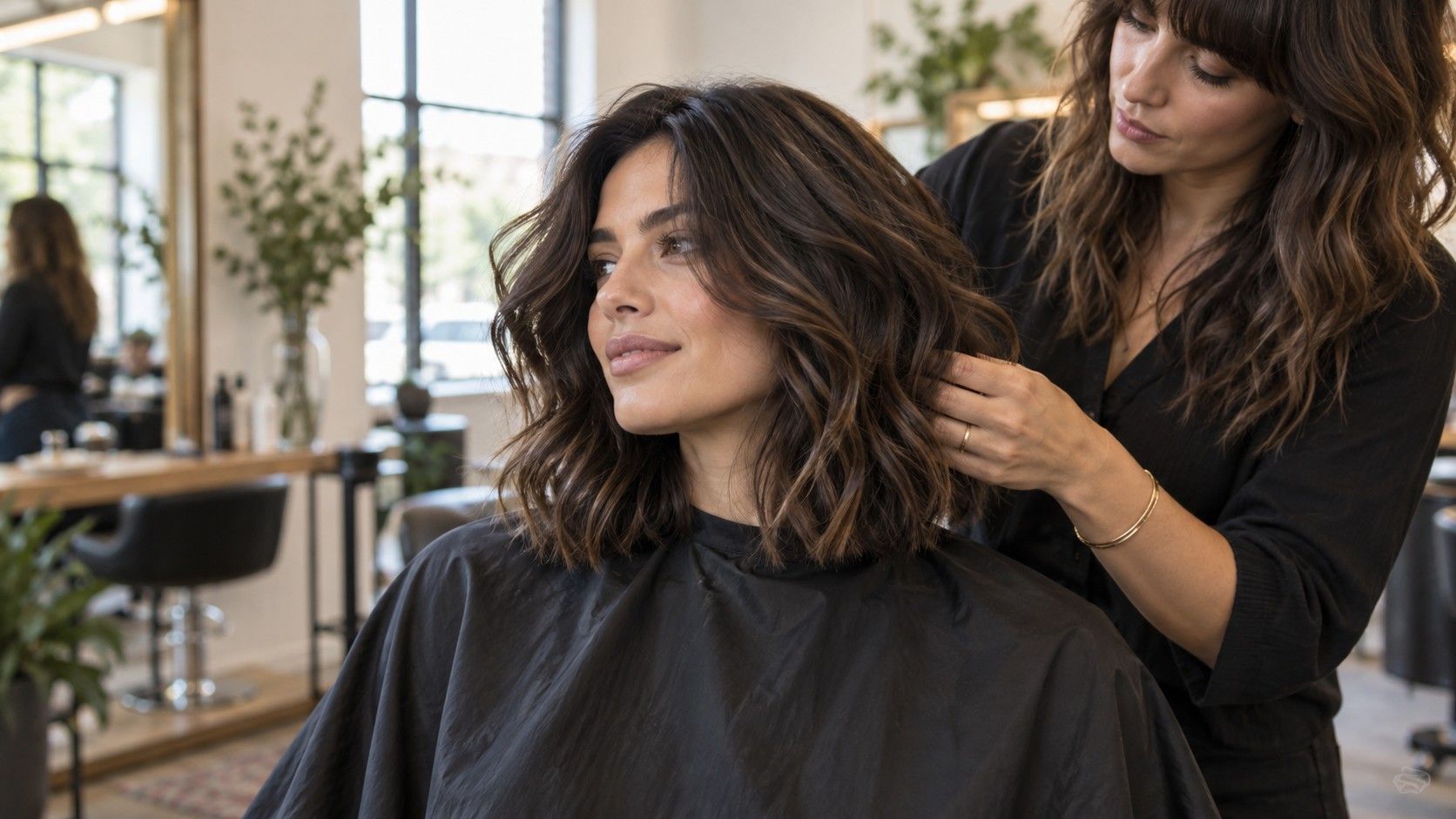
For thick or curly hair, a bob needs a discussion about width. Removing too much weight can make curls frizz; leaving all of it can create a wide, rounded block at the ends. A stylist who asks how you normally dry your hair is already asking the right kind of question.
Long layers and waves when you want to keep length
Long hair gives a heart-shaped face plenty of room for movement, but it can also become one long, flat curtain if the crown is heavy and the ends have no shape. Long layers can help, especially when they begin below the cheekbones and keep most of the perimeter intact. The goal is not a staircase of visible pieces. It is hair that bends and lifts without looking chopped up.
Loose waves often work well because they create variation around the sides and lower length. They do not need to be big, polished curls. A few bends made with a wide iron, or natural waves encouraged with a diffuser, are enough. Leave the last inch straighter and break up the pattern with your fingers. Uniform ringlets can look costume-like and take much longer than most people want to spend.
Fine hair needs restraint with layers. Ask for a blunt or softly rounded baseline, then only enough shorter work to move the front. Thick hair can carry more internal layering, but the shortest pieces should still fit into your normal updo if that is how you live most weekdays. It is annoying to gain a good down style and lose the ability to put your hair out of the way.
Do not build a huge crown by accident
Volume at the crown is not forbidden for a heart-shaped face, despite what old diagrams suggest. It just changes the whole silhouette. If you love a lifted blowout, wear it. If you are trying to make hair feel less top-heavy, avoid stacking every styling decision there: root spray, backcombing, a high part and short crown layers can add up fast.
Try a softer off-centre part before changing the cut. It can give the root some lift while allowing the length to fall around the cheeks and chin. On naturally curly hair, let the crown keep some height and focus on shaping the sides so the curl has a clear outline. Flattening textured hair to obey a face-shape chart is rarely worth the effort.
Product can quietly create the same problem. Heavy dry shampoo and texture spray at the roots may make the top look broader while the ends become dry. Put grip where the hair needs it, usually at the roots only if they collapse, and use a small amount of cream on the ends when they look fuzzy. You do not need every product mentioned in a tutorial.
Choose a part that cooperates with your hairline
A centre part can look simple and modern, but it asks the hairline to cooperate. If one side naturally grows forward or your roots separate unevenly, forcing a perfect centre part every day becomes tiresome. A shifted centre part, only a centimetre or two away, often looks just as clean and relieves that tension.
A side part can make a side fringe and long layers feel connected. It also helps when you like one ear exposed or wear glasses, because the hair has a clear place to go. The drawback is that a very deep side part can flatten one side and pile everything onto the other. Check it in a moving video, not only a still mirror pose. You want a part that survives turning your head.
Bring your usual part to the appointment and tell the stylist whether it changes after washing. They can cut the front with a little flexibility rather than making it dependent on one exact line. That is especially helpful with curtain bangs, where an overly precise centre part can make both sides look oddly separate.
Leave the salon with a repeatable version
At the end of the appointment, ask for the five-minute version of the style. Not the version made with a salon dryer, fresh sectioning and someone else's arms. Ask which product to use first, where to direct the fringe, and whether the ends should be twisted, brushed or left alone. A clear answer tells you whether the cut suits your routine.
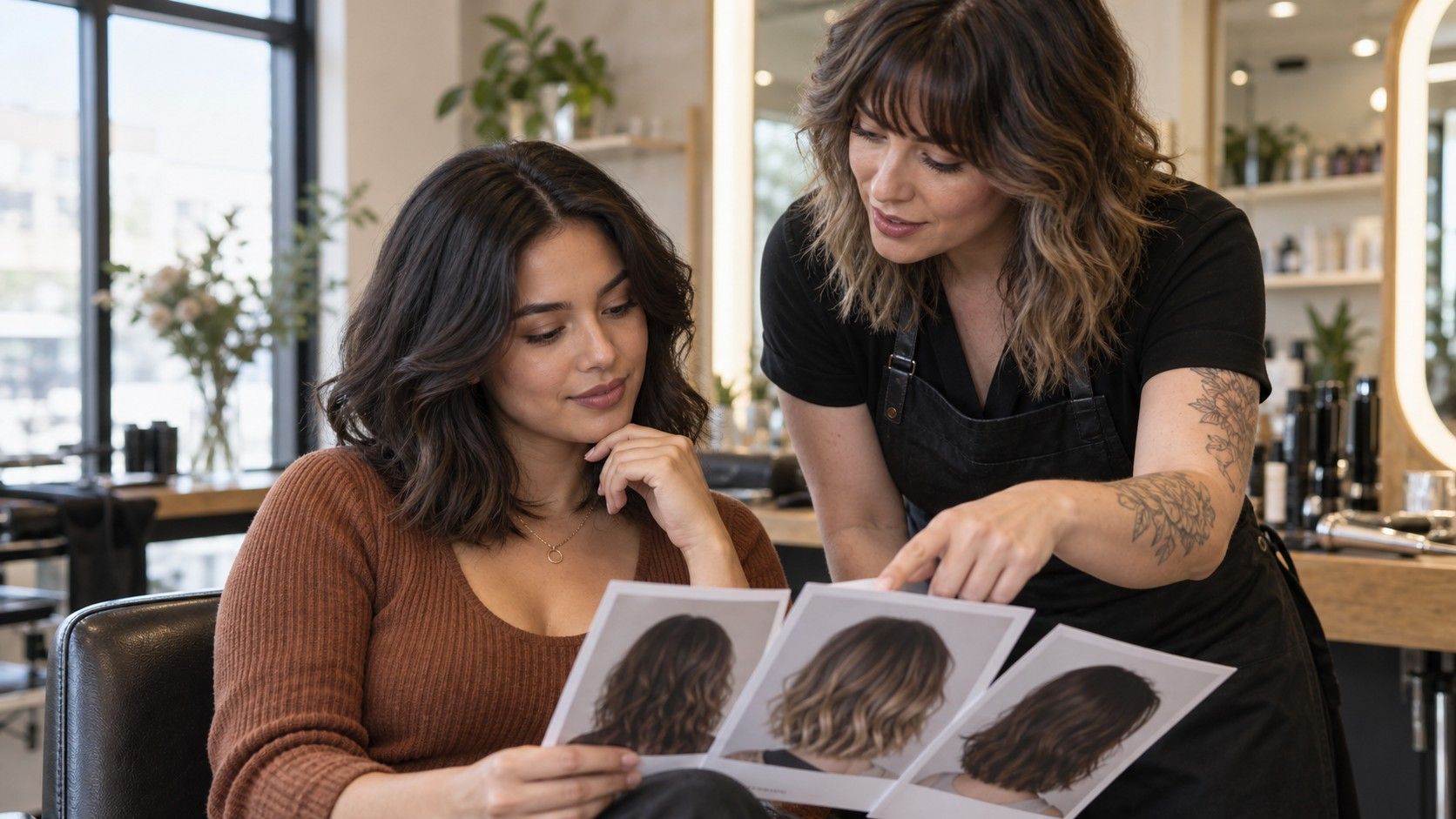
Bring two reference photos and explain what you like in each. Maybe one has the fringe you want and the other has the length you need. Include one photo that is wrong for you. Saying that the crown looks too high or the layers too thin is more helpful than saying you are open to anything.
The best hairstyle heart face choice is the version that gives you a shape you enjoy without asking you to become a different person before work. A soft fringe, chin-length bob, long layers or natural waves can all be right. Keep the decision grounded in your texture, your part and your mornings; the rest is detail.