An oval face gets called easy to style so often that the phrase becomes unhelpful. It can make a bad consultation sound like a safe one: choose anything, the stylist says, and off you go. In practice, hairstyles for oval faces still need to work with your hairline, density, parting and the ten minutes you may or may not spend in front of a mirror on Tuesday morning.
Start with your hair, not the flattering list
An oval face usually has a gently rounded hairline and chin, with the face a little longer than it is wide. That describes proportions; it does not tell a stylist whether your crown lies flat, whether one temple thins out, or whether your fringe springs upward the moment it dries. Those details decide whether a cut feels relaxed or becomes a small daily argument with a round brush.
Short cuts when you do not want a daily blow-dry
Before collecting screenshots, stand by a window, pull your hair straight back, then release it into its usual part. Notice where the bulk sits. Fine hair that collapses at the sides asks for a different bob from dense hair that expands there. If you wear glasses, hold them on while testing a fringe. The frame can make a narrow, heavy bang feel much more present than it did in a salon photo.
Bobs and lobs: choose the line you will really maintain
The useful question is not whether a cut is the best hairstyle for an oval face. Ask what you want the haircut to do at eight in the morning. Keep length? Make a cowlick less obvious? Let air-dried waves look intentional? A good answer gives the appointment somewhere concrete to begin.
A pixie cut can look sharp on an oval face, but the word pixie covers a lot of territory. A close crop with a long piece over the forehead behaves very differently from a soft crop with movement at the crown. Bring a photo from the side as well as the front. The side view shows whether the nape is neat, whether the crown has lift, and how much length is left around the ears.
For straight, medium-density hair, a longer top with a slightly broken fringe is often easier to live with than a perfectly smooth, sculpted shape. It can be dried forward with fingers and a little cream. The catch is that the fringe needs trimming more often than the rest of the cut. Four or five weeks is common if you want it to sit above the eyes rather than become a curtain you keep pushing aside.
Curly or coily hair needs another conversation. Cutting a short shape wet and then expecting every curl to land at the same point is optimistic. Ask how the stylist plans for shrinkage and where they expect the volume to appear once the hair is dry. A short cut should leave room for the texture you actually have, not demand a smoother version of it.
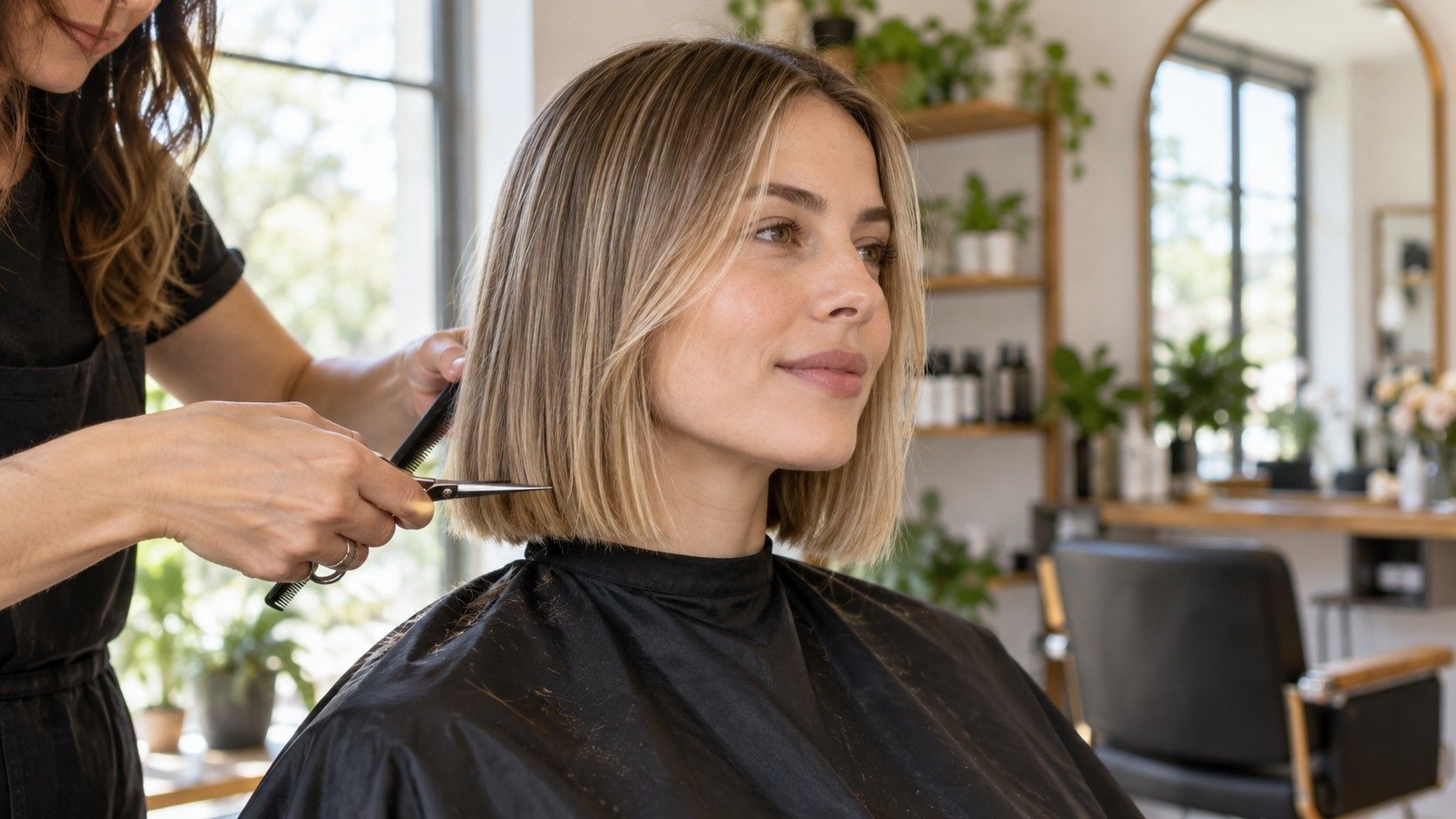
The bob is the haircut people book after seeing a clean jaw-length line under studio lighting. At home, that line meets rain, sleep, a scarf and whichever side of your head bends first. For an oval face, a chin-length bob, a French bob and a shoulder-skimming lob can all work. The deciding factor is often the ends: blunt ends make fine hair look denser, while lightly softened ends stop thick hair from forming a solid triangle.
A blunt bob works well if your hair is fairly straight and you do not mind a quick pass with a dryer or flat brush. If your hair has a stubborn bend around the neck, leave it a little longer or add discreet internal layers. Otherwise the cut may flick outward exactly where you hoped it would lie quietly. This is not a face-shape failure; it is just hair doing what hair does.
| Cut | Works well when | Check before booking |
|---|---|---|
| French bob | You like visible texture and can style the fringe | Whether the shortest front pieces will spring above your cheekbones |
| Blunt chin bob | Your hair is straight or easily smoothed | How the neck and jawline behave after air-drying |
| Shoulder-length lob | You switch between tucked, waved and tied-back hair | Whether the front is long enough for your usual ponytail |
The lob is the calmer option for anyone unsure about losing length. It gives you a visible reset without putting every styling decision on the ends of your hair. It also fits behind the ears and into a low tie, which sounds mundane until you are trying to cook, cycle, or get through a humid commute.
Bangs are a commitment to the front row
Bangs are often suggested to people looking for haircuts for an oval face because the proportions can accommodate many fringe shapes. That is true, but it skips the part where bangs occupy the most noticeable inch of the haircut. They meet your eyebrows, skin, glasses and eye makeup before anyone notices the back layers.
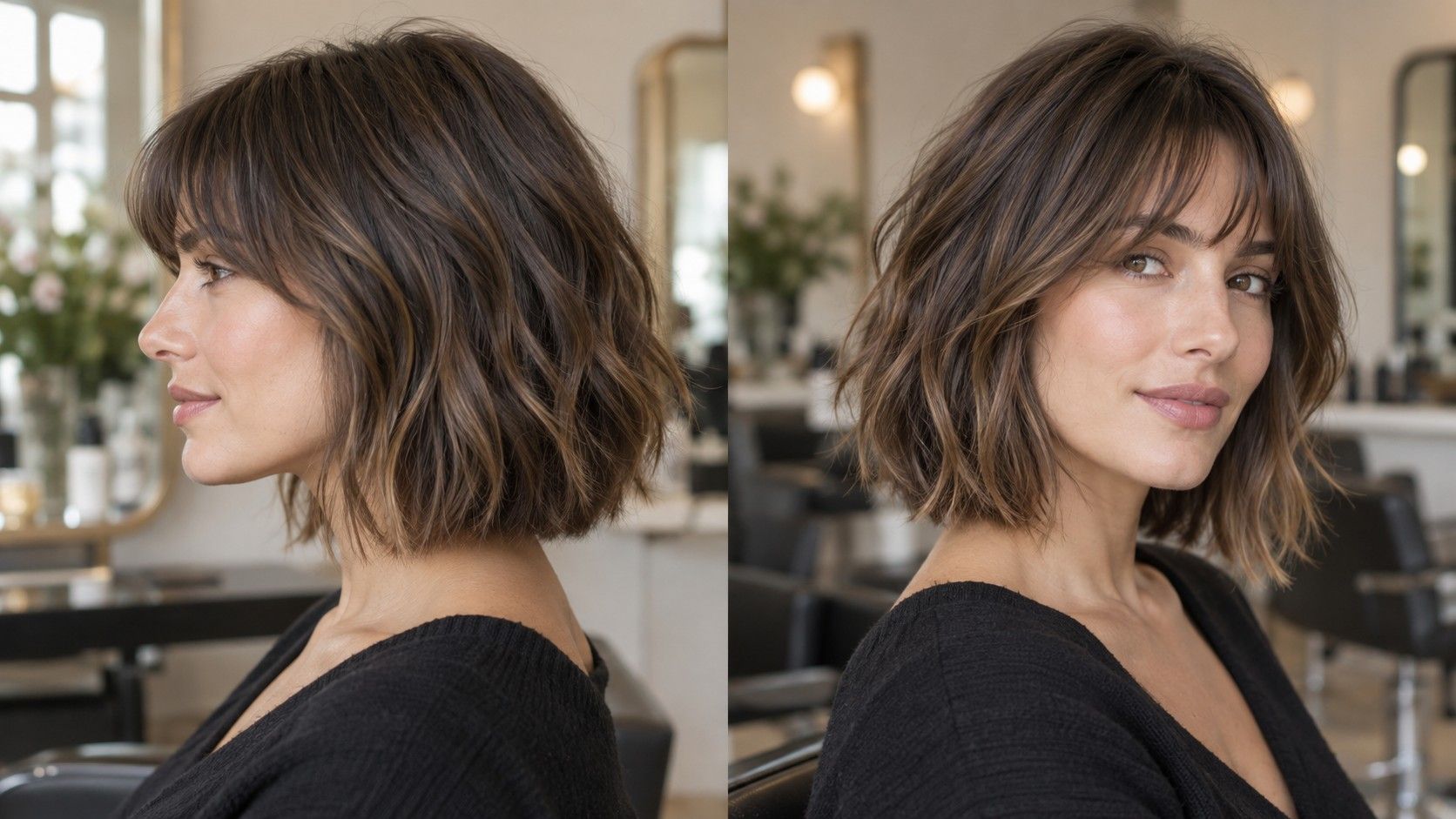
Soft curtain bangs are a sensible entry point if you normally part your hair near the middle. They can blend into face-framing layers and grow out without a dramatic awkward phase. A full, straight fringe gives a stronger statement, but it needs enough density at the front. On fine hair, taking too much from the crown can leave the rest of the cut looking depleted. Ask the stylist to show you the triangle of hair they plan to use before the first snip.
A side-swept fringe remains useful when you have a clear cowlick or prefer a side part. It needs direction while drying, usually for less than a minute, but it is less forgiving if you wash and run. The most reliable test is to style your current front section in that direction for several days. If it keeps falling back to its old part, believe it.
Long hair needs shape, not a pile of layers
Long hair can be the most low-drama choice for an oval face, especially when you like to wear it up as often as you wear it down. The problem comes when “layers” gets translated into random short pieces everywhere. On fine hair, too many layers remove the weight that keeps ends looking substantial. On thick hair, no layers at all can make the lower half feel heavy and inert.
Ask for a clear plan: where should the shortest face-framing piece begin, where should the first internal layer sit, and how much perimeter will remain? If you mostly wear your hair wavy, the shortest layer should be checked dry or close to dry. A piece that reaches the collarbone when wet may jump to the cheek once the wave tightens.
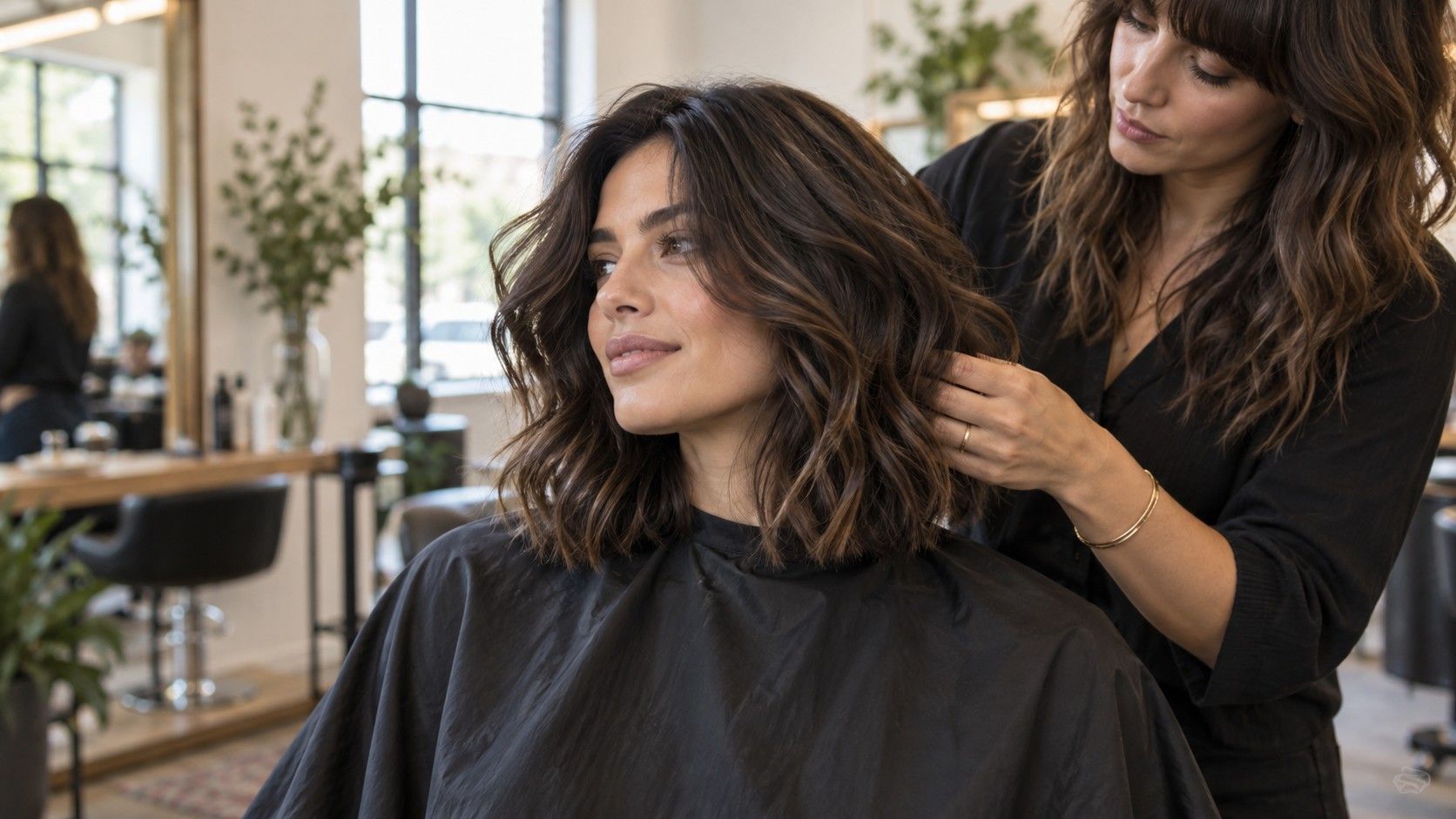
Long, rounded layers suit a person who wants movement without making the cut look obviously layered. A modern shag is more deliberate: it brings texture around the crown and through the front, and it asks for a little styling product to separate it. Neither is morally better. The first is quieter; the second is more expressive and less likely to look polished by accident.
Parting changes the haircut more than people expect
A middle part gives symmetry, but it can also expose a thin area at the crown or make naturally flat roots look flatter. A soft off-centre part shifts the balance without committing you to a deep side sweep. Try both after washing, when the roots are clean and honest, rather than after a day of dry shampoo and hair clips.
For an oval face, there is no requirement to preserve perfect symmetry. A deep side part can make a long fringe feel purposeful; a middle part can make a textured lob look clean and current. What matters is whether your hair will return there without heat. If it will not, a cut built around that part will feel high maintenance even if the photo looks effortless.
Tell the stylist where you part it on ordinary days and whether you switch it. They can leave the front slightly adaptable instead of cutting a dramatic line that only works on one side. This small detail is often the difference between loving a fresh haircut and loving it only while you are still in the salon chair.
Make the consultation concrete
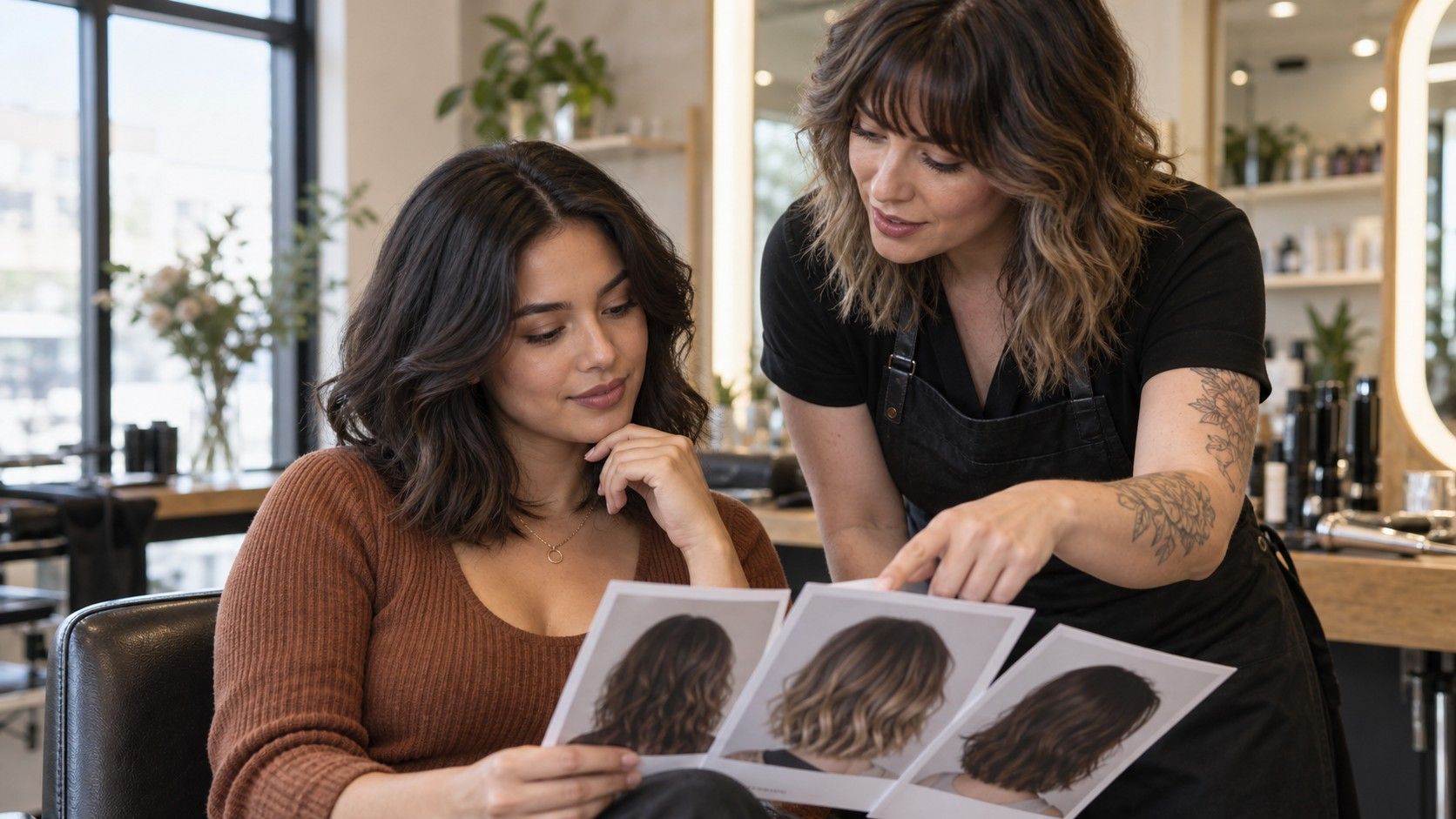
Bring two photographs you genuinely like and one you do not. The dislike photo is useful evidence. Perhaps the bangs feel too dense, the bob sits too round, or the layers look like they were cut for someone with twice your hair. Say that out loud. It is more useful than the polite instruction to do whatever looks good.
Then give the practical limits: how often you wash, whether you use heat, how often you can return for trims, and whether you need to tie your hair back. A stylist can work with those facts. They cannot work with the hope that a precision bob will somehow behave like a wash-and-go long cut.
The best hairstyle oval face choice is usually the one that makes your familiar features feel like your own while fitting the life around them. That may be a low-key lob, a pixie with a grown-out fringe, or long layers you can ignore for a few days. The label matters far less than whether you can repeat the result without needing a second person and perfect lighting.