Hairstyles for round faces are often described as a list of things to avoid, which is a dreary way to choose hair. A round face usually has softly curved cheeks and similar width and length, but that is only one part of the picture. The useful question is where you would like the hair to sit, how much styling you will actually do, and whether a cut still feels good when it is not fresh from the salon.
Understand what stylists mean when they talk about balance
When a stylist mentions balance for a round face, they usually mean the overall silhouette, not a need to make the face look narrower. Height at the crown, a little vertical movement beside the face, or length below the chin can shift where the eye travels. These choices can make a style feel more elongated or more structured if that is what you enjoy.
Choose a short cut by checking where the perimeter lands
Look at your current hair with one question in mind: where is its widest point? A blunt bob that expands at the cheeks gives a different effect from a wavy lob that becomes fuller below the jaw. Neither is automatically bad. The first can be graphic and confident; the second can feel softer and more relaxed. Knowing the difference lets you choose deliberately instead of following a warning about width.
Pick bangs by studying your hairline before the inspiration photo
Parting also changes the geometry. A centre part shows both sides evenly and can look clean with long layers. A side part moves weight upward and to one side, often creating a little lift at the roots. If your hair naturally falls deeply to one side, trying to force a centre part just to follow a rule may leave you fighting the cut each morning.
Short haircuts for round face shapes can work very well, but the perimeter matters. A pixie with some height at the crown and softer length around the temples can create a lively outline. Ask the stylist to show you the side profile before the final cut. The shape around the ear, the amount left at the nape, and the direction of the fringe all affect whether the style feels easy or severe.
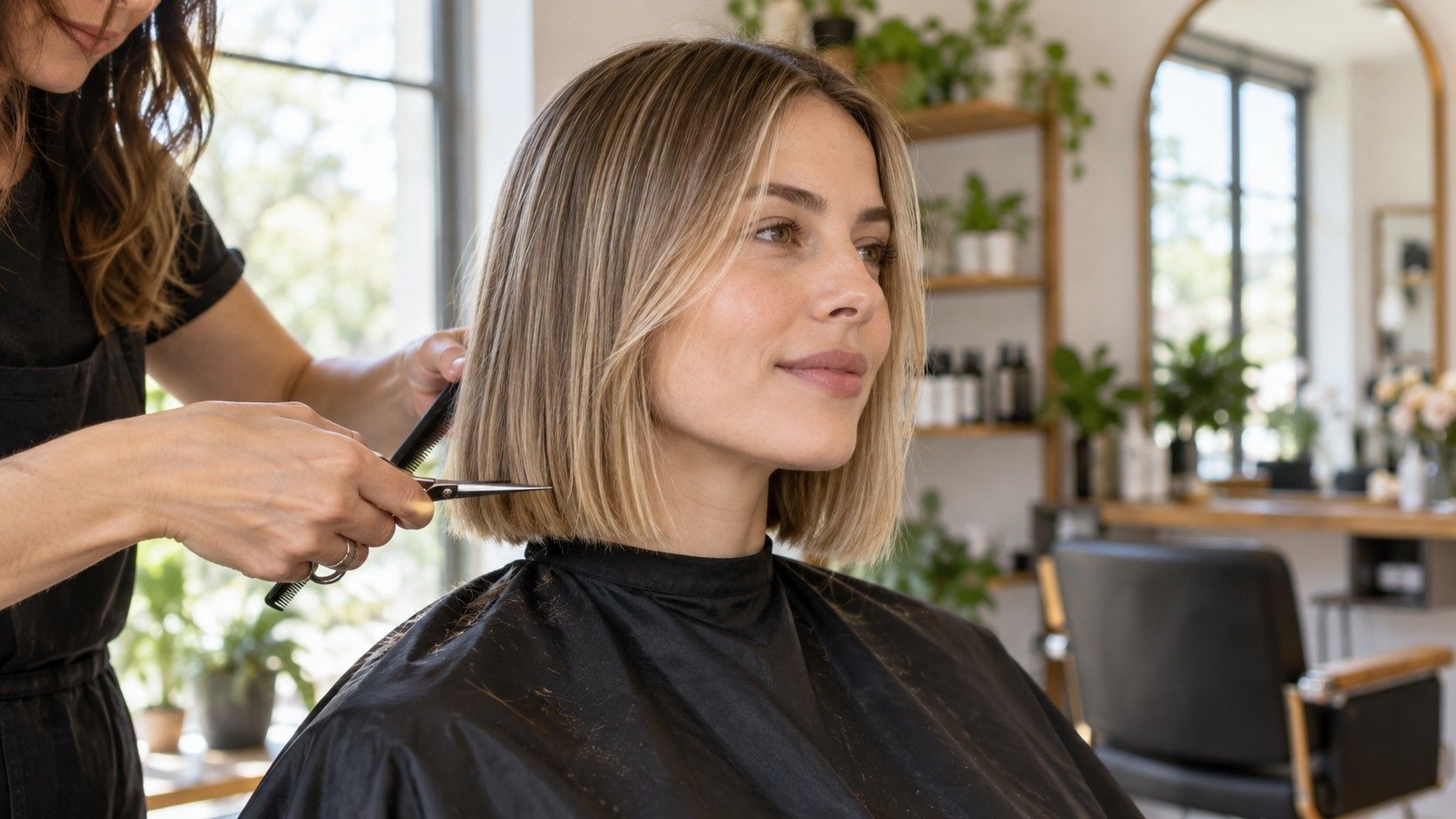
A bob gives you more decisions. A clean chin-length bob places a strong horizontal line near the lower face. If you love that sharpness, own it. If you want a more vertical feel, try a bob that reaches just below the chin, with a slight angle toward the front or texture at the ends. That extra length is small on paper and noticeable in the mirror.
Be realistic about texture. A sleek short bob needs regular drying if your hair bends or swells in humidity. A textured crop can be much quicker, but it needs product and frequent trims to keep its shape. A good salon test is to see the cut after the stylist has loosened the finish rather than only under a smooth, perfect blowout.
| Cut idea | What to look at | Daily reality check |
|---|---|---|
| Textured pixie | Height at crown and softness near the temples | Needs trims, but styling can be quick |
| Bob below the chin | Where the front edge meets the jaw and neck | May need a brush if ends flip outward |
| Shoulder-length lob | Whether volume sits below the cheeks | Easy to tie back and flexible between washes |
| Long layers | First layer placement and face-framing | Works best when layers match your natural texture |
Use medium and long lengths to control where volume sits
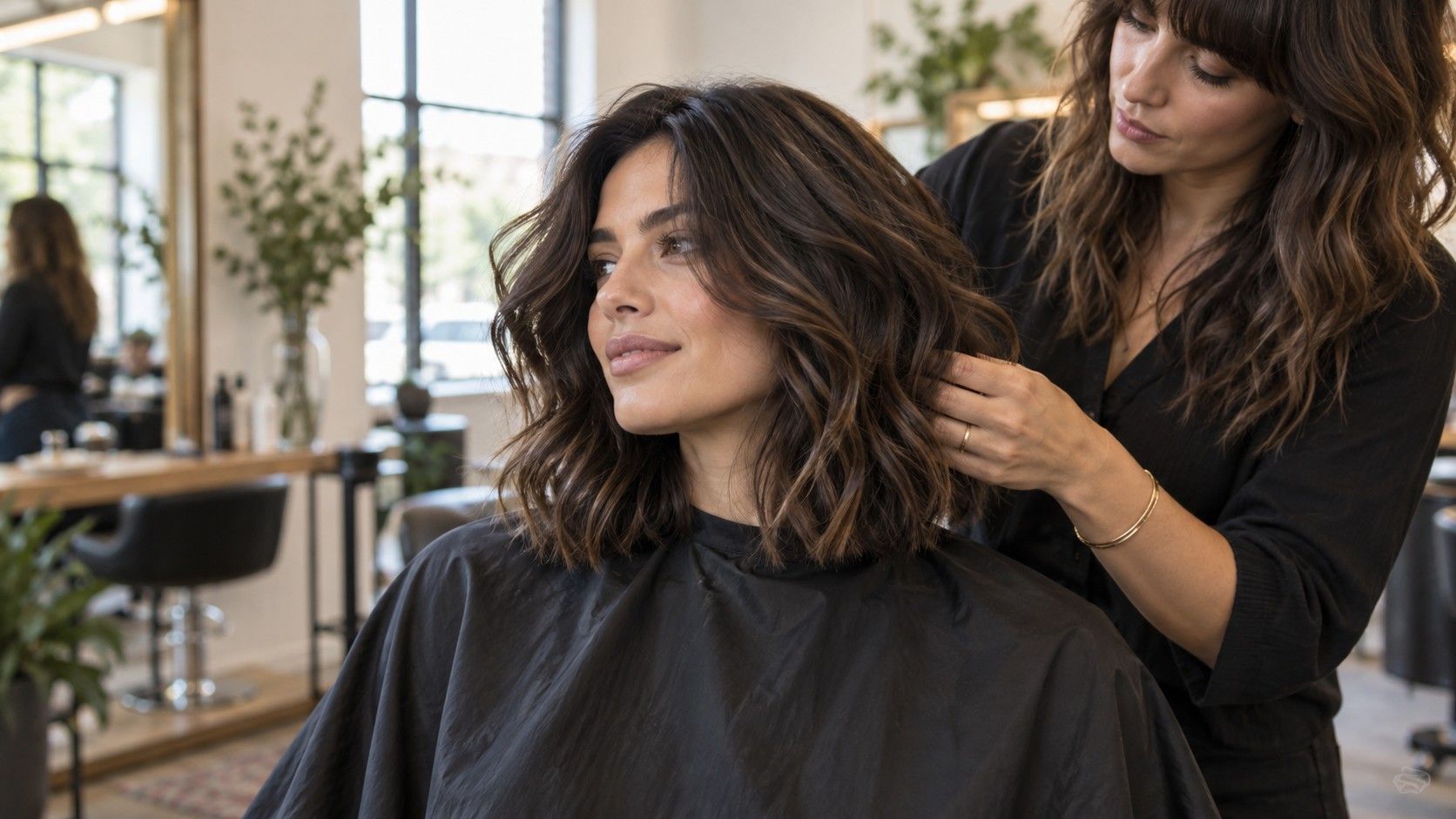
A shoulder-length lob is a practical middle ground for many people. It gives enough length to tuck behind the ears or tie back, but it can still have a clear shape. For a round face, ask where the bulk will sit after the hair dries. Layers that begin below the cheekbones can keep the upper sides from becoming too full while adding movement through the lower length.
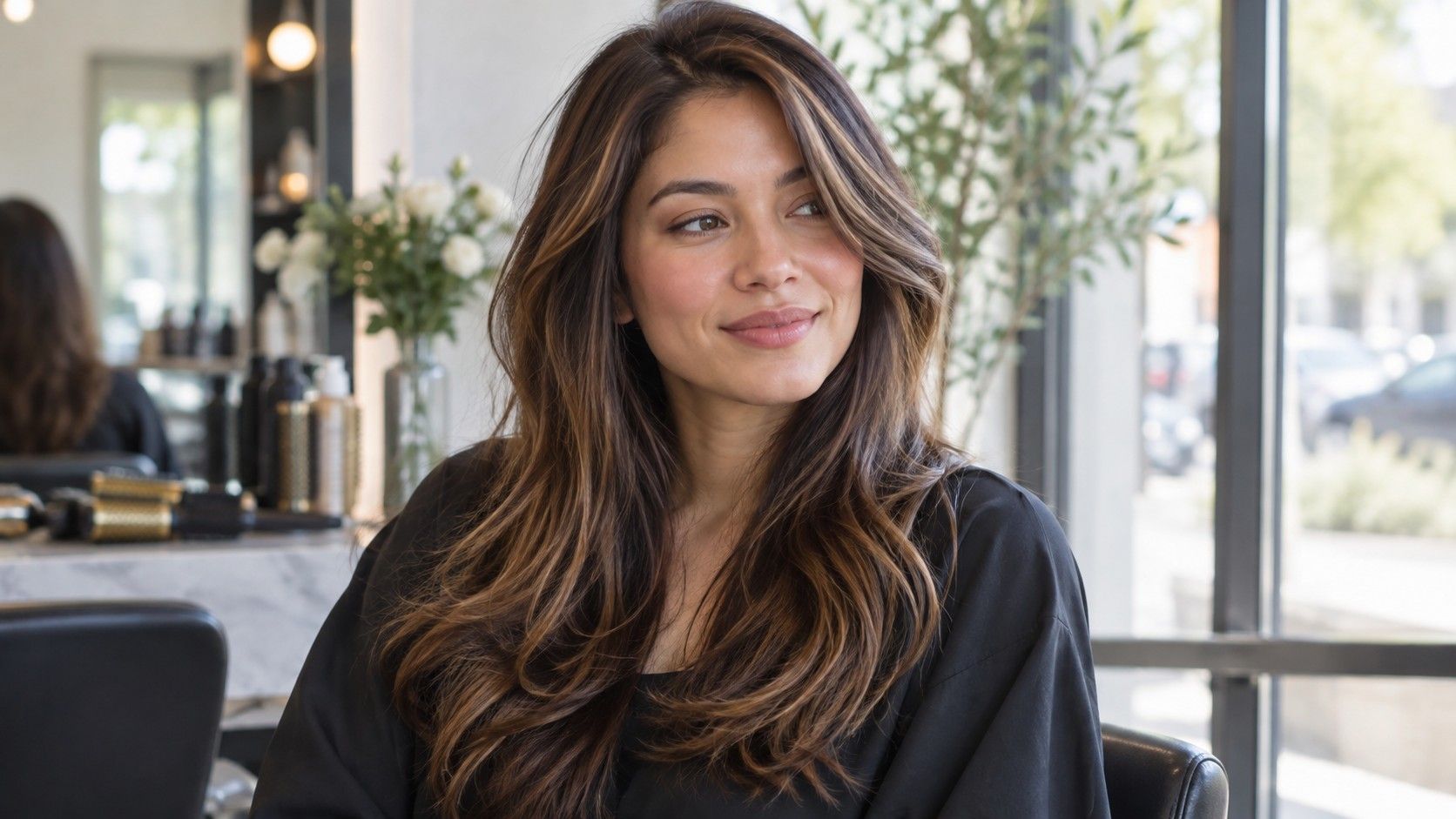
Long hair has more room for face-framing, but long layers are not a magic answer. Fine hair may look thinner if too much is removed from the ends. Thick hair may feel heavy without some internal shaping. A stylist can keep the perimeter fuller and place a few longer layers around the face instead of cutting a ladder all the way through. This often gives movement without making the hair look stringy.
Watch how the hair behaves with your usual outerwear. Collarbone cuts can catch on a coat collar and turn out at the ends. Long layers can disappear under scarves. If you commute in damp weather, test a similar length on a normal day before committing. The best hairstyle round face choice is one that works beyond a five-minute photo session.
Bangs can change the visible proportions of a face quickly, but they also create a daily styling task. Curtain bangs are popular because they can open at the centre and blend into longer layers. On a round face, the longer outer pieces may create a soft vertical line beside the cheeks. The exact starting point matters: brow-length centre pieces behave very differently from a longer fringe that begins around the cheekbone.
A side-swept fringe can work nicely with a side part, especially if your hair naturally grows in that direction. It may add movement over the forehead without requiring a solid horizontal line. A blunt fringe can be striking too, but it draws a clear line across the face and usually needs more frequent trimming. Choose it because you like the statement, not because someone said it is required or forbidden.
Check the front hairline after an air-dry. A cowlick at the centre or one front corner may push a fringe apart. It can still be cut, but the stylist may need to leave it longer or make it lighter. A virtual preview cannot see this growth pattern, so bring the photo for direction and let the real hair make the final call.
Style for lift and movement without building a helmet
Root lift can change a style without changing the cut. Start with a small amount of mousse or root spray near the crown, then dry the roots in the opposite direction from the final part. You do not need a huge bump. Even a little height breaks up a flat line from forehead to cheek and can make the rest of the hair move more easily.
For waves, keep the bend loose through the mid-lengths and leave the ends a little straighter. Tight, uniform curls that begin at the cheek can create a rounded outline; loose waves that start lower give a different shape. This is not a ban on curls. It is simply a way to decide whether you want volume at the sides, at the shoulders, or mostly at the crown.
Use a mirror from the side as well as the front. A style can look balanced head-on but become too flat at the crown in profile. Conversely, adding volume everywhere can make hair feel like a helmet. The goal is a shape that moves when you do. If it requires a full set of hot tools every day and you dislike doing that, ask for a softer cut that carries more of the work.
Bring a clear, realistic request to the salon
Save a few images with the details you like and make a note of what they have in common. You may like the length of one, the side part of another, and the texture around the jaw in a third. Showing this pattern is more useful than asking for an identical cut on someone with different density and curl pattern.
Tell the stylist about your non-negotiables. Perhaps you need to tie hair back for work, you air-dry most days, or you do not want layers that require a curling iron. If you are considering a dramatic short cut, ask what a slightly longer first version would look like. You can always take more off later; adding it back is a slower project.
Round faces do not need correction. They offer soft lines that can support cropped hair, long hair, a blunt bob, or a curtain fringe depending on the mood you want and the time you have. Choose a shape that makes sense in your own mirror, then give it a few ordinary days before deciding whether it has become yours.