People searching for hairstyles for square faces are often handed the same promise: soften everything. It sounds harmless, then turns into a vague instruction that can produce limp layers, a fringe you do not like, or curls that vanish by lunchtime. A square face has clear width through the forehead and jaw, but a haircut should respond to your hair and habits rather than trying to erase a feature.
Confirm the shape without turning it into a diagnosis
A square face often has a forehead, cheek area and jaw that read as similar in width, with a more defined jawline than an oval or heart-shaped face. That is a starting description, not a rulebook. Hairline shape, fuller cheeks, a stronger chin and the way you hold your head all change what you see in a mirror. It is easy to misread the face after a slicked-back selfie taken from too close.
Softness comes from movement, not from hiding
Take one photo from arm's length in daylight with your hair clipped away, then look at it beside a normal photo where your hair is loose. The second image matters more because that is the person a haircut has to serve. If your natural part throws volume to one side, it already changes the outline around the jawline. A cut that ignores it can look oddly formal every day.
Short cuts need an honest styling plan
The aim is not to make the face look less square. Most people are really deciding whether they want more movement near the cheekbones, a less severe fringe, or an easier way to wear a bob. Put that actual problem on the table. It gives the stylist something useful to solve.
When a stylist talks about softness, ask where they mean it. It can come from a side part, a bend in the hair, piecey ends, a wispy fringe, or layers that begin below the cheekbones. These choices do different jobs. Loose waves add movement across the whole cut. Face-framing layers give the front a less rigid edge. A soft fringe changes the top of the picture, but asks for regular attention.
One thing I would avoid is cutting feathery layers into hair that is already fine and sparse at the ends. The word soft may sound right, but too much removal can turn the lower half into a few tired points. Fine hair often gets a better result from a blunt base plus a handful of longer, carefully placed layers. It still moves; it just keeps enough substance to look like a haircut after a week.
Thick hair has the opposite trap. A blunt, one-length cut can feel heavy at the jaw and refuse to bend. Internal removal and longer layers can make it easier to style, but they should be planned around your curl pattern. Ask what the ends will do when you let them air-dry. A beautifully blown-out salon finish is not a forecast.
A short crop can be a strong choice for a square face if it has enough texture or length where you want it. A cropped back with a longer, imperfect top can be rubbed dry with a small amount of paste. It is quick, but not maintenance-free: the outline needs trims roughly every four to six weeks, and the top still needs some direction after a shower.
A very neat, symmetrical pixie can look excellent if that crispness is what you want. Do not choose it because somebody said it will soften a jawline; it probably will not, and it does not need to. Choose it because you like the exposed neck, the clean side view and the fact that it looks intentional with minimal length. If you prefer something gentler, keep the fringe a little longer and break up the edges rather than carving them into a hard helmet line.
Short curls deserve their own plan. The shape should be assessed dry enough to see where the curls live, especially around the temples and crown. Cutting the front too short on stretched hair can give you a fringe that feels much smaller once humidity arrives. It is worth asking the stylist to stop and show the dry silhouette before taking more length.
Bobs and lobs: watch where the weight lands
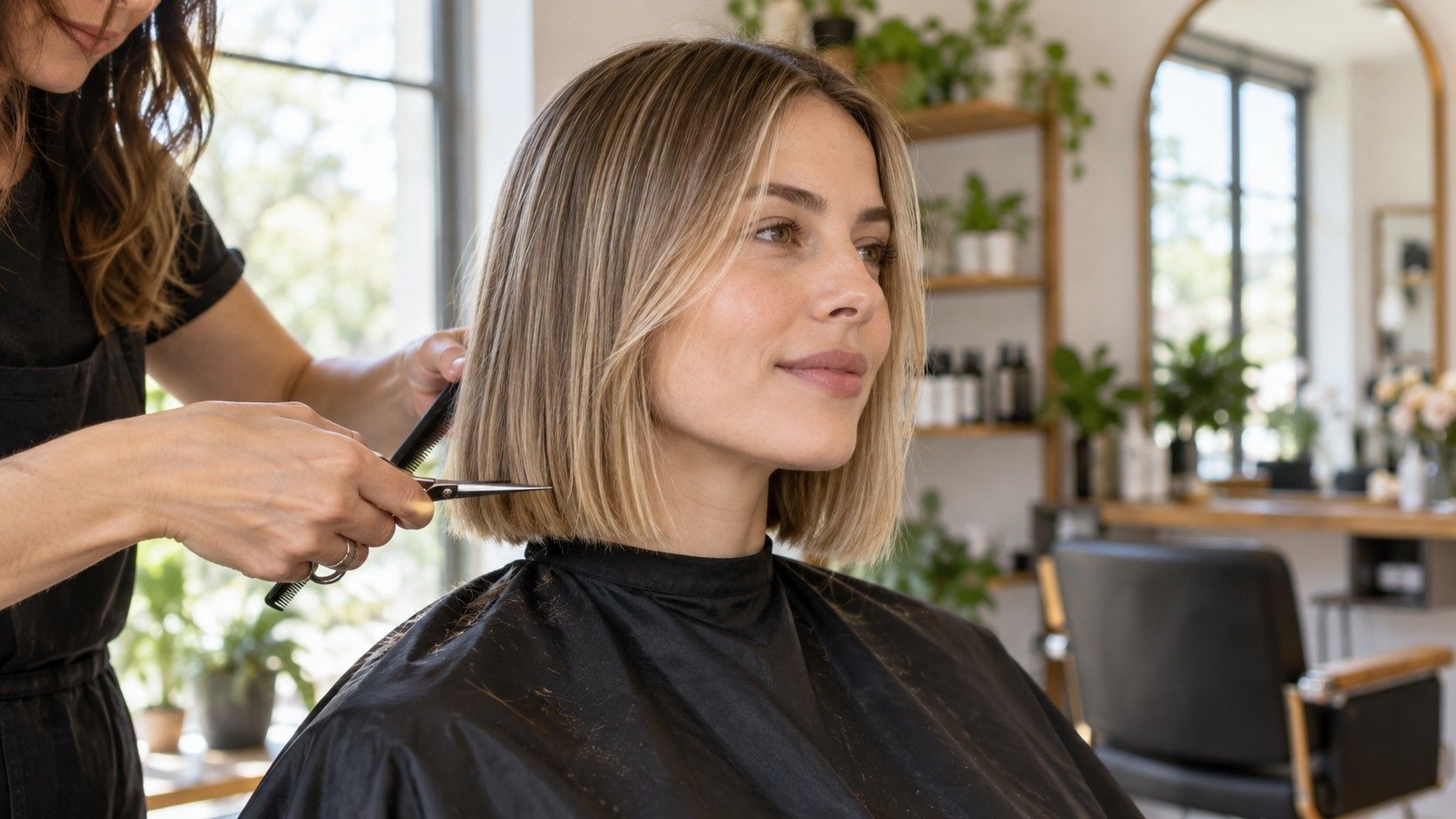
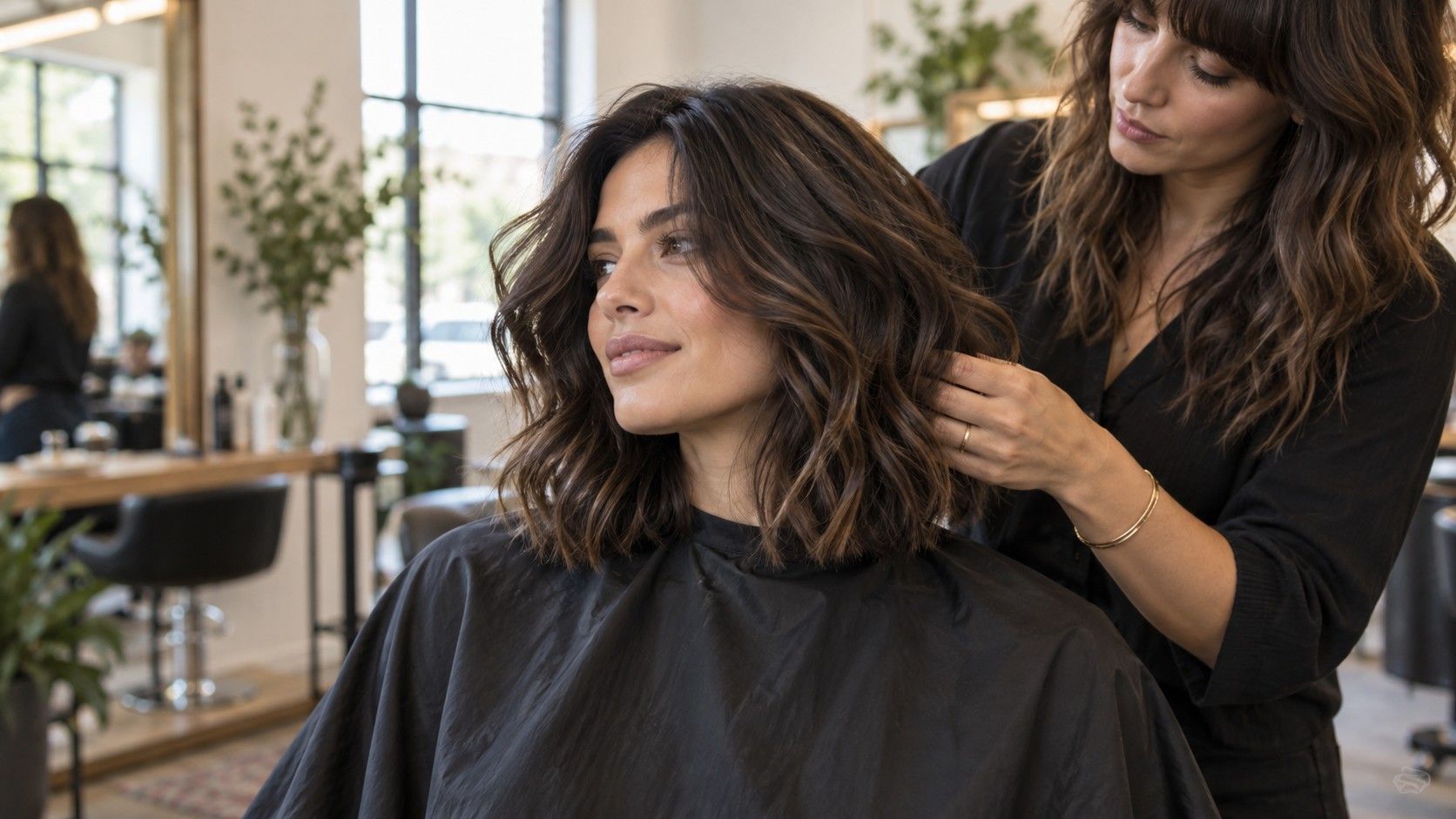
A lob is often the easiest middle ground among haircuts for square face shapes. It can sit between the collarbone and shoulders, carry a little wave, and still go into a clip or low tie. The length gives the front room to move instead of ending in a rigid band at one exact point. A soft off-centre part can help, but it is optional; a centre part works if your roots naturally cooperate.
A jaw-length bob can be lovely too, though it is less forgiving than people admit. Check it from the side and in motion. If your hair turns under neatly, a clean line may suit your routine. If the ends puff outward or flip after air-drying, ask for a slightly longer front or subtle texture through the last inch. That adjustment is usually more helpful than piling on visible layers.
| Option | What it gives you | What to ask at the appointment |
|---|---|---|
| Textured pixie | A quick shape with visible movement at the top | How often the outline and fringe need trimming |
| Collarbone lob | Flexibility for waves, clips and a low tie | Whether the front remains long enough to tuck behind the ears |
| Jaw-length bob | A clear line and a more deliberate finish | How the ends will behave without a round-brush blow-dry |
The practical test is simple: imagine your most rushed weekday. If the answer involves straighteners, two products and a mirror you do not have time for, choose a version of the cut with a little more length or less precision. A haircut can be polished without requiring a performance.
Fringe should follow the way your hair falls
Side-swept bangs are often recommended for square faces, partly because they create a diagonal at the front. They can be useful, especially if you already part your hair to the side. But a fringe cannot be talked into ignoring a strong cowlick. If your front hair splits in the middle every morning, a heavy side fringe may need heat and clips each time you wash it.
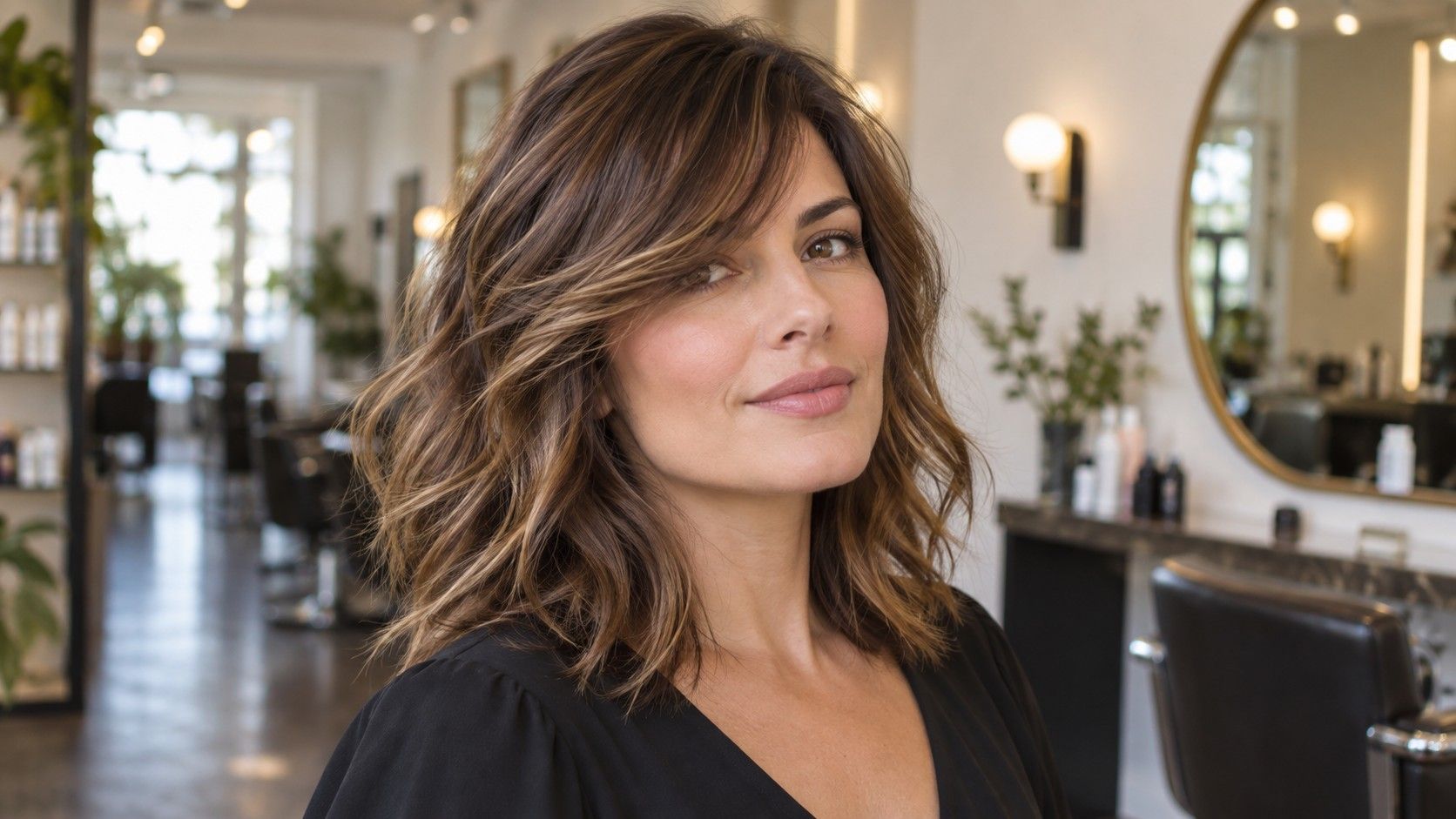
A soft fringe that opens slightly in the centre can be more forgiving. It gives the forehead some texture without making a sharp, horizontal bar. Curtain bangs work if you are willing to dry the roots in the direction you want them to sit. They tend to suit medium and long hair because they can connect to face-framing layers, but they can also work with a lob when cut with restraint.
Ask how much hair will be taken from the crown. This small triangle controls whether the fringe feels airy or dense. You can always cut a little more. You cannot put the missing density back into the rest of a fine-haired cut next week. The first trim is a better place to make the fringe bolder if you still want it.
Long hair works best when the layers have a reason
Long hair gives you plenty of options, but it does not automatically create movement. One-length hair can look clean and dramatic, especially if it is glossy and thick. On hair with a natural wave, though, it may pull the crown flat and leave the ends as one heavy sheet. Long layers can relieve that weight, provided they start in the right place and do not turn the perimeter into a fringe of thin ends.
For loose waves, ask for layers that support the wave rather than disconnect it. A stylist can cut a few face-framing pieces and take weight from within, leaving the main length intact. For straight hair, longer layers may be enough; shorter ones can look choppy unless you style them. The word shag is useful only if you genuinely want a textured, less controlled finish and do not mind using a diffuser or styling cream.
Consider how you wear your hair outside the salon. If it lives in a bun for work, check that the shortest front layers stay out of your eyes. If you wear it down but rarely use heat, let the stylist see it in its natural texture. A cut planned for a big barrel brush is not automatically kind to an air-dried wave.
Style around the jawline, then stop fussing
A small bend below the cheekbone or around the lower half of a lob can make a haircut feel less static. You do not need uniform curls. In fact, identical waves on every section are one of those salon looks that can become fussy at home. Alternate the direction of a few pieces, leave the ends straighter, and brush it through lightly. The result reads as hair rather than evidence of an hour with a curling iron.
Product matters more than people expect. Fine hair may only need a light mousse at the roots and a touch of cream at the ends. Thick, dry hair may need a smoothing leave-in before any wave holds its shape. Start small. Overloading the front is a quick way to make soft fringe look stringy, particularly after a damp walk or a long day indoors.
The best hairstyle square face choice is not the one that follows every old rule about angles. It is the cut whose movement, length and upkeep match your hair. Keep the parts you enjoy, make the practical compromises openly, and let the haircut look lived in. That usually feels far better than chasing a diagram.