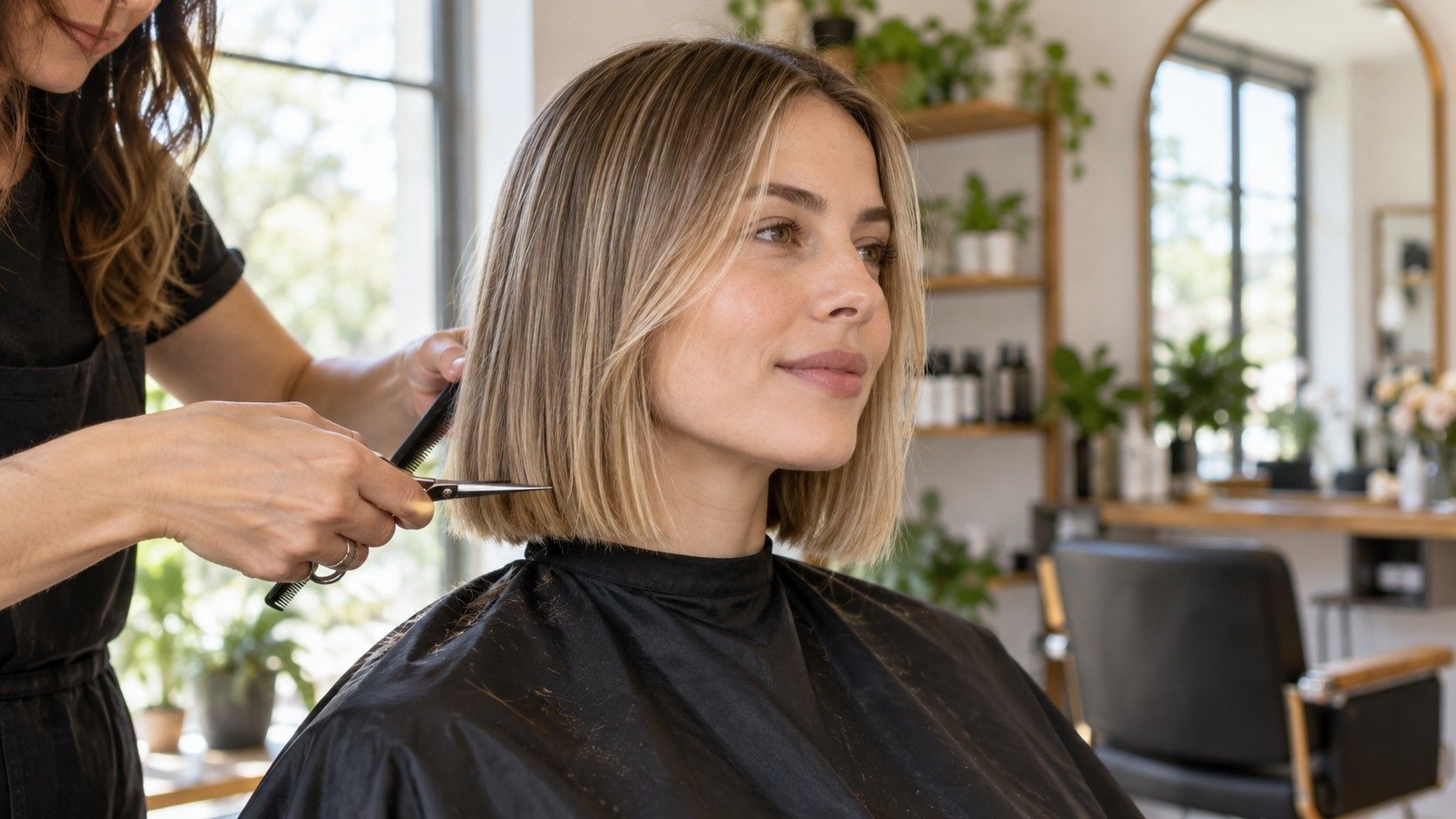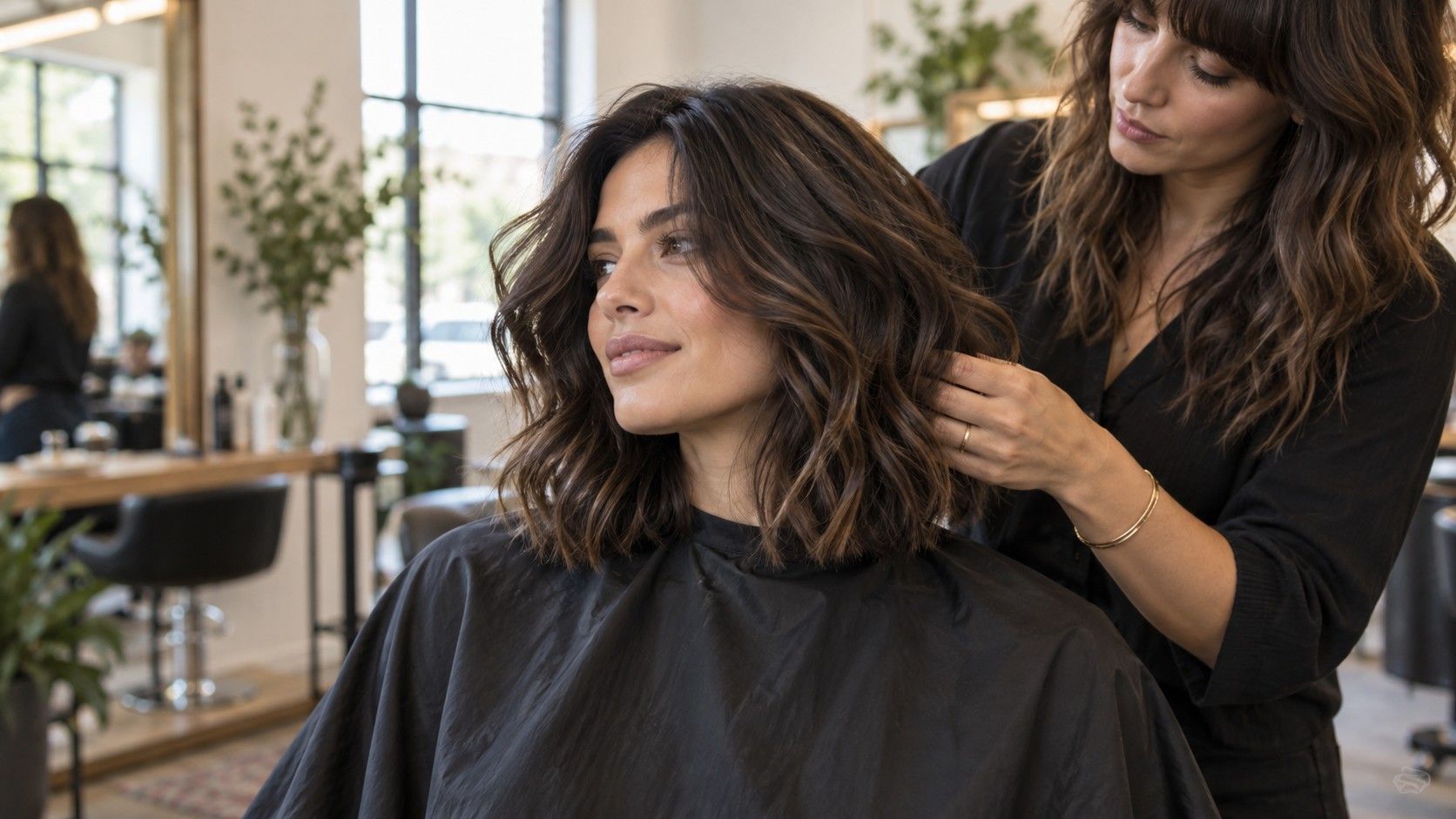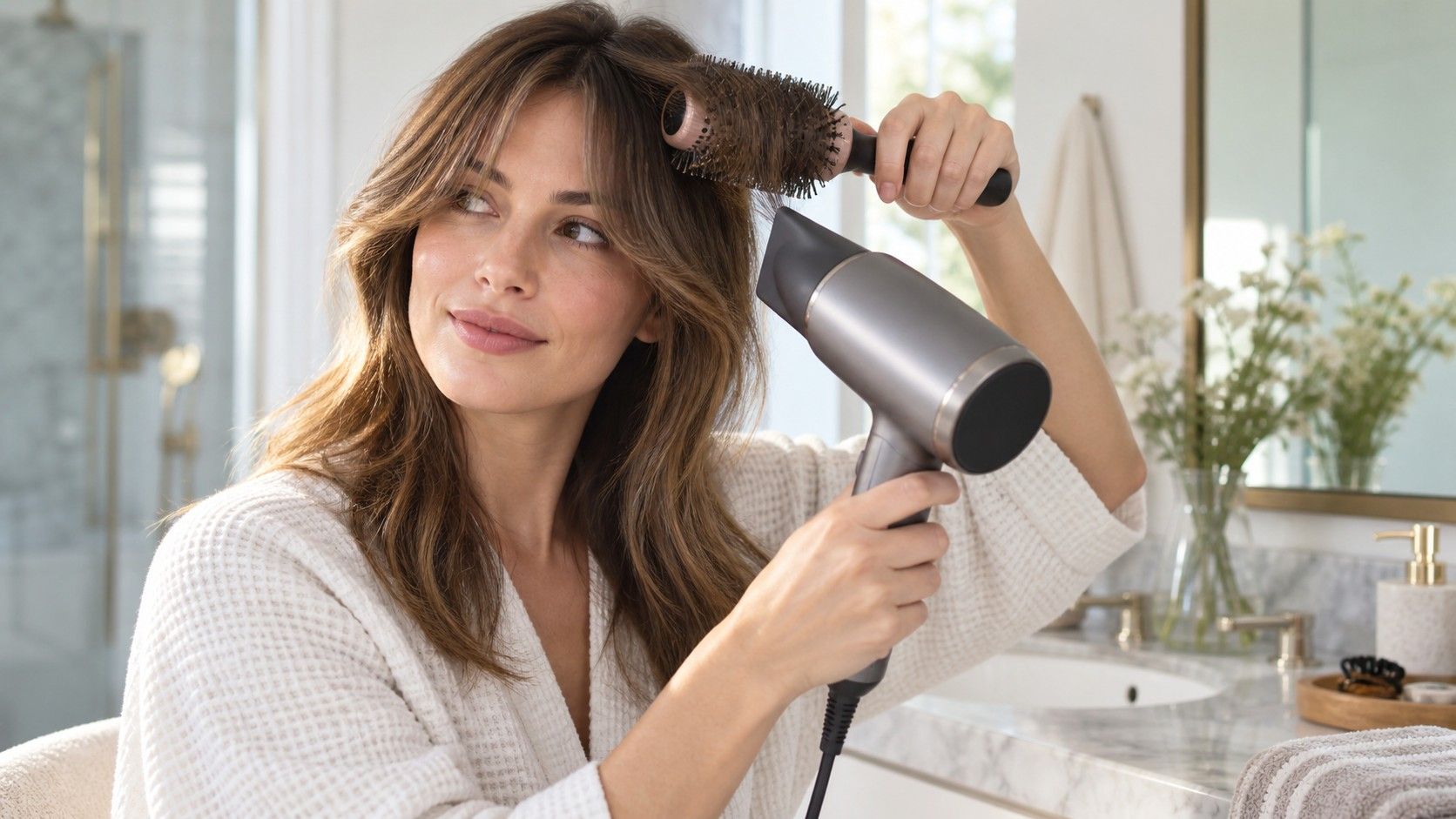
Curtain bangs have a generous reputation: they are supposed to suit everyone, grow out politely, and make unwashed hair look intentional. In real life they are two small sections of hair with a surprising talent for splitting, clinging to the forehead, or pointing in opposite directions. Learning how to style curtain bangs is less about buying a drawer of tools and more about controlling dampness, parting, and airflow before the hair decides its own plan.
Set expectations before you blame the fringe
A curtain bangs hairstyle is designed to open away from the centre of the face. That means it needs some cooperation from your natural growth pattern. If the hair at your front hairline grows sharply forward or forms a cowlick, the fringe may never sit in the same soft curve you saved from a salon account. It can still look good, but it will need a slightly different part, more length, or a daily reset.
Start at the right stage of dampness
The first mistake is treating curtain bangs like the rest of your hair. Long lengths can air-dry with acceptable results; the fringe is too close to the face for that gamble. It picks up skin oil, steam from the shower, and the shape of the pillow before breakfast. A quick targeted blow-dry is usually kinder than leaving it to dry badly and attacking it later with a hot tool.
Use the dryer to erase the old part first
Look at the cut itself when it is clean and dry. The shortest pieces should meet somewhere you are comfortable showing: around the cheekbone, the upper lip, or below the jaw. If your fringe was cut with a strong centre split but you naturally wear a deep side part, it will keep fighting you. Style can compensate for a little mismatch, not for a cut designed around a completely different parting.
Freshly washed curtain bangs do not need to be dripping wet, but they do need enough moisture to forget the last shape they dried in. If you begin when they are almost dry, the dryer simply bakes the existing kink into place. A spray bottle is more precise than soaking your whole head again. Mist the fringe until it feels evenly damp from roots to ends, then comb it forward before you decide where to part it.
There is a useful middle ground here. Hair that is soaking tends to stretch and look longer, which can fool you into over-rolling the ends. Hair that is barely damp has already set around the cowlick. For most textures, think of the stage just after towel drying: cool to the touch, no water running down the forehead, and flexible enough to change direction with a brush.
Apply products lightly. A pea-sized amount of mousse or root-lift spray can help very fine bangs hold their shape, but a rich cream near the hairline often makes them separate into shiny strings by noon. If you use dry shampoo, save it for dry hair and use it sparingly at the roots. It is useful for absorbing oil between washes, not for building the first shape on wet fringe.
The most reliable styling trick is not a dramatic brush technique. First dry the fringe from side to side, crossing it over the centre in both directions while the dryer points down from above. This loosens the imprint of yesterday's part and calms a stubborn cowlick. Use your fingers at this stage if a round brush feels like too much coordination before coffee.
Once the roots are mostly dry, make the part you actually want. Take the left section, lift it slightly at the root, and brush it forward and then away from the face while following with the dryer. Repeat on the right. The airflow should travel from root to end, not blast upward into the fringe. Upward airflow makes soft hair look fluffy for five minutes and frayed for the rest of the day.
A medium round brush is usually more practical than an enormous one. The barrel should be large enough to create a curve rather than a tight ringlet. Roll only the last part of the section around the brush and hold it for a moment while warm air passes over it. Then finish with a short cool shot and let the hair fall without pulling it straight. Heat creates the bend, but cooling is what lets it stay there.
| What you see in the mirror | Likely cause | Quick correction |
|---|---|---|
| One side sticks forward | A cowlick or hair dried in its old part | Wet that side again and cross-dry it before parting |
| The fringe divides into strings | Too much product or oil at the roots | Brush through, use a little dry shampoo on dry hair, then reset the roots |
| Ends curl under too tightly | Brush barrel is too small or held too long | Use a larger barrel and roll less of the length |
| Bangs are flat by midday | Roots were dried downward with no lift | Lift at the root for a few seconds, then cool before releasing |
Choose a finish that fits the rest of your hair
Curtain bangs styling can look strange when the fringe is perfectly sculpted and the rest of the hair is completely untouched. Match the finish to your normal texture. With straight hair, a soft outward bend at the ends is enough. With waves, twist the front pieces loosely away from the face while drying and let them join the pattern rather than forcing a glossy curve that has nothing to do with the lengths behind them.
A roller can be useful when you want extra root lift, especially on fine hair. Place a large roller under each front section, rolling back from the face, while the hair is still warm and almost dry. Leave it in while you apply makeup or make tea. Take it out gently and separate the pieces with your fingers. Brushing it hard is how a pleasant lift becomes a retro helmet.
Be careful with flat irons. They can rescue a sharply bent end, but they are easy to overuse because the fringe is right in front of you. Use a low to moderate heat setting, make one quick pass on completely dry hair, and keep the iron moving. Repeatedly pressing the same small section is particularly rough on short front pieces, which receive more washing and touching than the rest of the hair.
Do a five-minute reset instead of a full wash
Most curtain bangs need attention more often than the rest of the head. That is not a failure of the cut; they sit against the forehead, so they collect moisture and oil first. On a non-wash day, clip the longer hair back, lightly wet just the fringe, and repeat the cross-drying step. It is faster than shampooing the entire head and gives a cleaner result than trying to hide a limp fringe with more spray.
If the roots are only a little flat, dry shampoo can buy time. Spray from a short distance, wait a minute, then work it in with fingertips rather than immediately brushing it through. Finish by lifting the roots with a dryer for twenty seconds. The goal is not to make the bangs look powdery or stiff. You only need enough grip to restore the small air gap between the hair and your forehead.
Humidity calls for lower expectations, not heavier product. In damp weather, a curtain fringe may open wider or lose its exact curve. Choose a softer centre part and let a little natural texture show rather than coating it with hairspray. A fringe that moves slightly reads more natural than one that remains rigid while the rest of you is reacting to the weather.
Know when styling cannot solve a trim problem
There is a point where no amount of round-brush work will make the bangs sit well. If the centre pieces poke your eyes, the sides no longer connect to the face frame, or you have to curl the ends every day just to make them disappear, the shape has grown past its useful moment. Curtain bangs generally need a small trim more often than long lengths, but that does not mean cutting them yourself in a magnifying mirror at 11 p.m.
Between appointments, ask your stylist what the grow-out plan is. Some cuts can be softened into longer cheekbone pieces; others need the centre shortened while the sides are left to catch up. This is worth deciding before the fringe reaches that awkward nose-level stage. A good trim should restore the balance between the middle and the sides, not just remove whatever length looks annoying that day.
The daily routine should feel almost boring once it works: dampen, cross-dry, part, direct away from the face, cool, and stop touching. If it requires three products, two irons, and fifteen minutes of negotiation every morning, change the technique or the cut. Curtain bangs are allowed to be a visible feature. They should not become the most demanding person in the room.