Medium length hair gets called the safe choice, which makes it sound dull. I think it is simply practical territory: enough hair to tie back, enough length to show a wave, and usually less drying time than long hair. The catch is that the shoulder area has its own rules. A few centimeters can decide whether the cut falls neatly or starts flicking outward every morning.
Use shoulder length when your week needs more than one hairstyle
Medium length hairstyles suit people who move between different versions of the day. You can wear the hair down for work, gather it into a low ponytail for exercise, and still have enough length for loose waves when you want a different finish. That flexibility matters more than a label such as lob or midi cut. It is also why this length survives indecision better than a very short crop or waist-length hair.
Choose blunt ends when you want weight, layers when you need movement
There is a practical test worth doing before an appointment. Hold your hair where you imagine the final line and try your usual ponytail, claw clip, and tuck-behind-the-ear move. If you rely on any of those, say so. A shoulder length cut can look excellent in a reference image while falling just short of the elastic on a busy morning.
Build two easy styles before buying more tools
The exact shoulder line is not neutral. Hair touching the top of the shoulder often flips because it has nowhere else to go. On straight hair, that bend may look accidental rather than soft. Going a little above the shoulder creates a cleaner shape; going a little below gives the hair weight to hang. A stylist can predict some of this, but your usual posture, coat collars, and texture all have a vote.
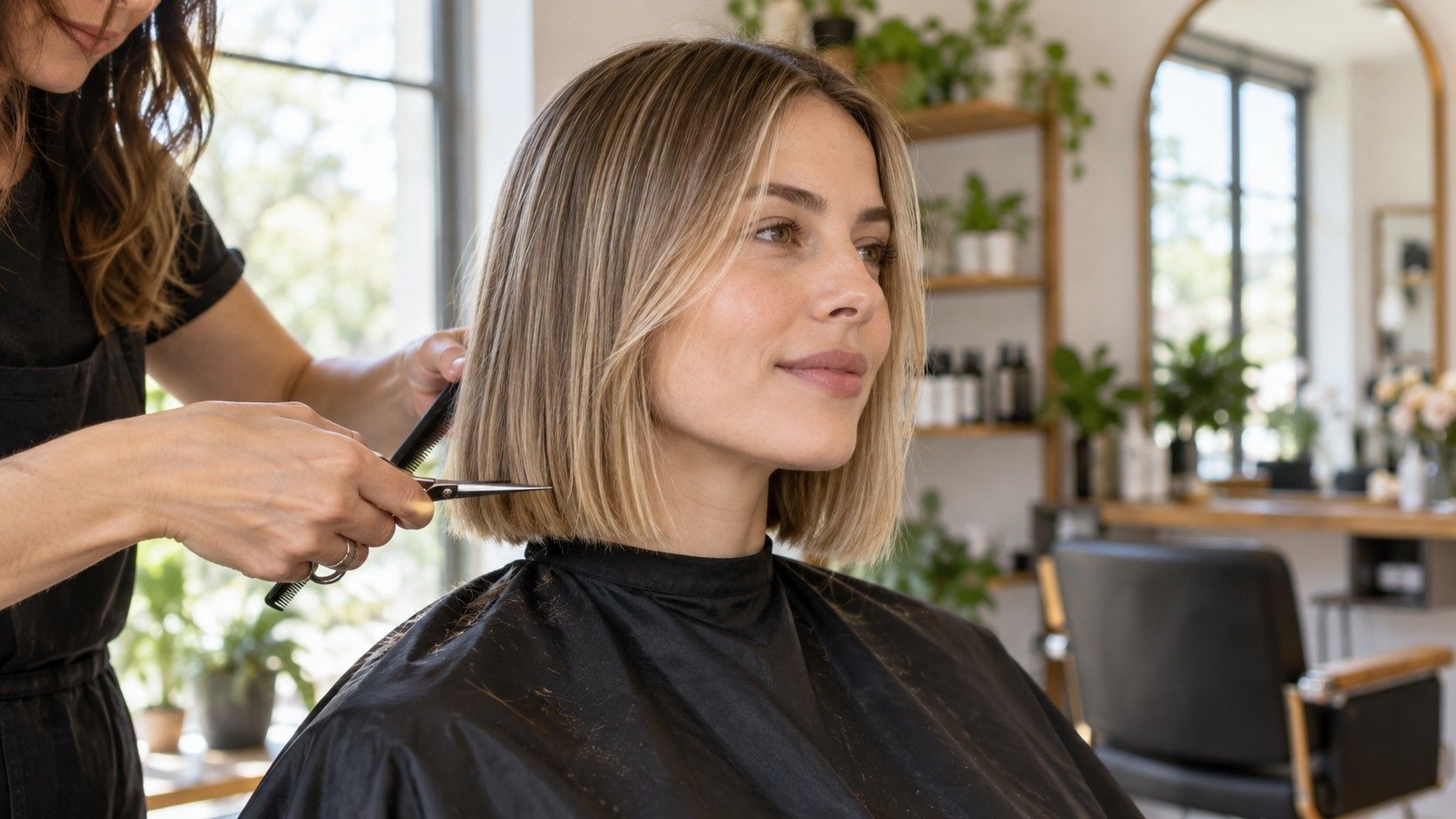
A blunt medium haircut keeps the lower edge solid. It is often a good option for fine hair because the ends look fuller and the cut does not dissolve into thin pieces after a few weeks. With a center part and a little bend, it can look relaxed without much intervention. The trade-off is that every uneven end becomes easier to see, so a blunt line rewards a reasonably regular trim.
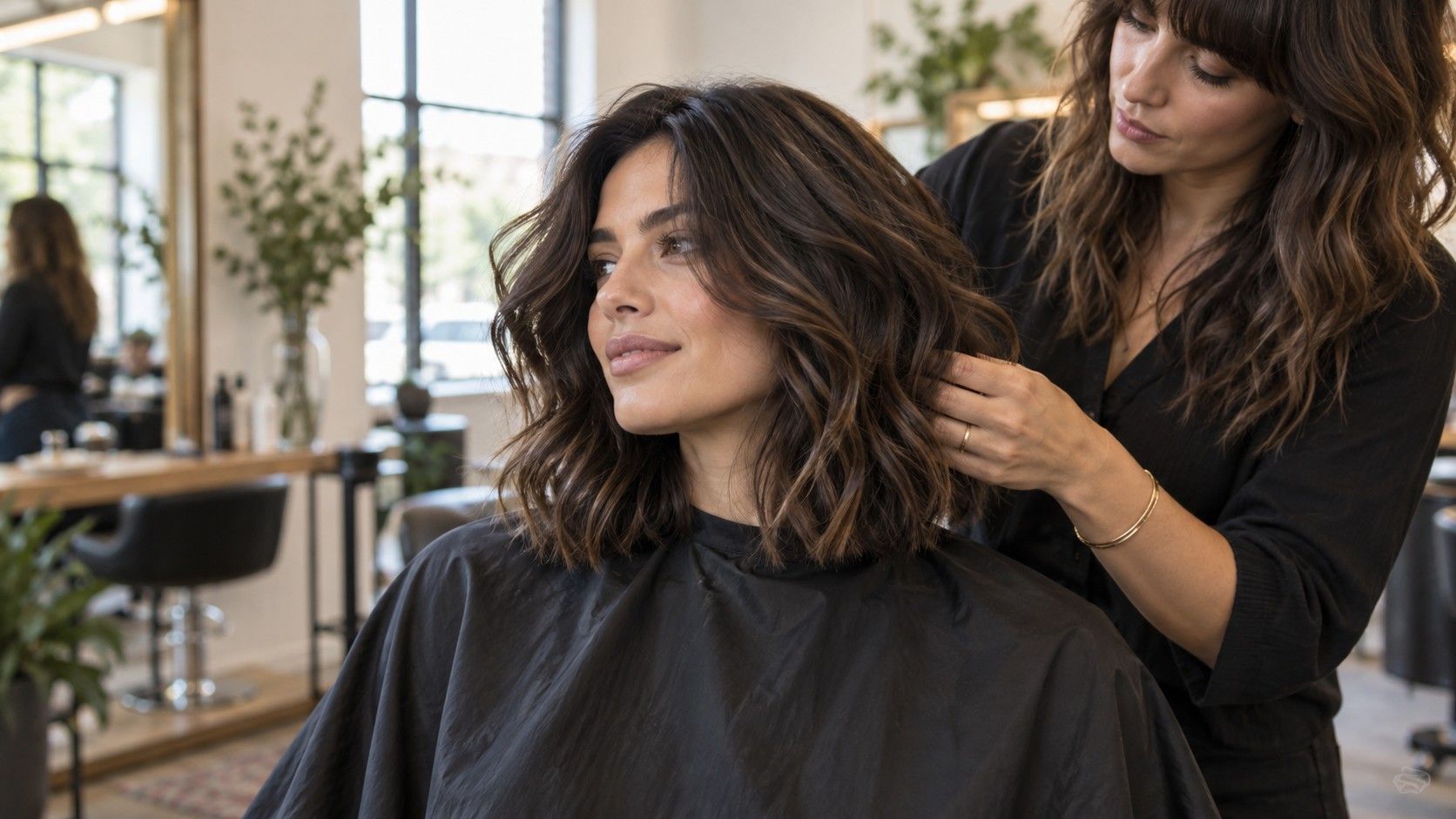
Layers change the way medium-length hair moves, especially if it has a natural wave or a lot of density. They can remove the heavy triangle shape that appears when thick hair all ends at one point. But there is a point where layers stop helping. Short layers cut high around the crown may need a round brush or diffuser to avoid a puffy silhouette. Ask where the shortest layer will sit after your hair air-dries.
A lob can sit between these choices. It may have a mostly blunt base with a small amount of invisible shaping inside, which gives movement without obvious steps. This is useful if you want the hair to look substantial in a low ponytail but less blocky when it is loose. Terms differ from salon to salon, so a photo of the ends and side view is more reliable than the word textured.
| Cut choice | Helpful for | Question to ask |
|---|---|---|
| Blunt shoulder-skimming cut | Fine or straight hair that needs visual density | Will the shoulder make the ends flip? |
| Long layers | Wavy or dense hair needing less bulk | Where is the shortest layer when dry? |
| Soft lob | Hair that must work down and in a ponytail | Can it still be tied back comfortably? |
| Shag-inspired medium cut | People willing to style natural movement | What happens to the crown without heat? |
Add fringe only when it fits your washing habits
Curtain bangs can make medium hair feel less plain without taking away the ponytail. The friendlier versions begin around the cheekbone and blend into the rest of the cut, so they can be tucked back or grown out. They still live on the front of your face, where skin oil and weather affect them first. Someone who washes every few days may find themselves rinsing just the fringe between full wash days.
A full fringe creates a stronger change, but it also creates a smaller daily job. It may need a quick dampening, a brush, or a few minutes of heat to settle. If you always wear glasses or a hat, test how the proposed length behaves around them. A fringe that sits perfectly above the brows in the salon can separate into an awkward curtain once it meets rain and a commute.
Face-framing layers are often the quieter alternative. They can give the same sense of movement without putting a fixed line across the forehead. The caveat is that they should be long enough to blend when you pull the hair back. I have seen many medium haircuts where the front looked lovely down and became a collection of loose, irritating pieces as soon as the wearer needed a ponytail.
Medium length hair can absorb a lot of styling advice, much of it unnecessary. Start with two looks you can repeat. One might be an air-dried shape with a little leave-in conditioner through the ends. The other could be a low ponytail with a middle or soft side part. If those two work, you already have hair for a normal week. Everything else is optional.
For a loose wave, choose the method that matches your patience. A large-barrel iron gives a polished bend but takes practice and heat protection. Braids or twists can produce a softer result overnight, though the outcome depends on how your hair holds a pattern. A short session with a dryer around the fringe may be enough if the rest of the hair dries well on its own. Medium length is flexible, not automatically effortless.
Claw clips deserve a test before the cut, especially if your hair is thick. A medium length with a lot of layers may slip out of a small clip even though it looks easy in a photo. Bring the clip you use most to the appointment if this is a daily issue. It sounds minor until you are trying to cook, exercise, or work at a laptop with pieces falling forward.
Set a trim schedule that protects the shape without turning into a chore
Medium hair usually offers more room between appointments than a cropped cut, but timing still changes the result. A blunt line may look best with a trim around every six to ten weeks, depending on how quickly your hair grows and how much heat you use. Long layers can often stretch longer, although split ends make the lower half feel rough before the length looks obviously different.
Think of maintenance as a budget of time, money, and attention. If you know you only book three or four appointments a year, choose a medium haircut that can soften as it grows rather than one that depends on a precise shoulder line. Tell the stylist that schedule. They may leave a little more length, keep the layers low, or avoid a fringe that needs frequent cleanup.
At the end of the appointment, ask for one warning sign that means it is time to return. It might be the ends catching on your collar, the ponytail feeling too thin, or the layers losing their shape around the crown. That is more useful than a vague promise about medium haircuts being easy. The right cut should give you options, then let you get on with the rest of your day.